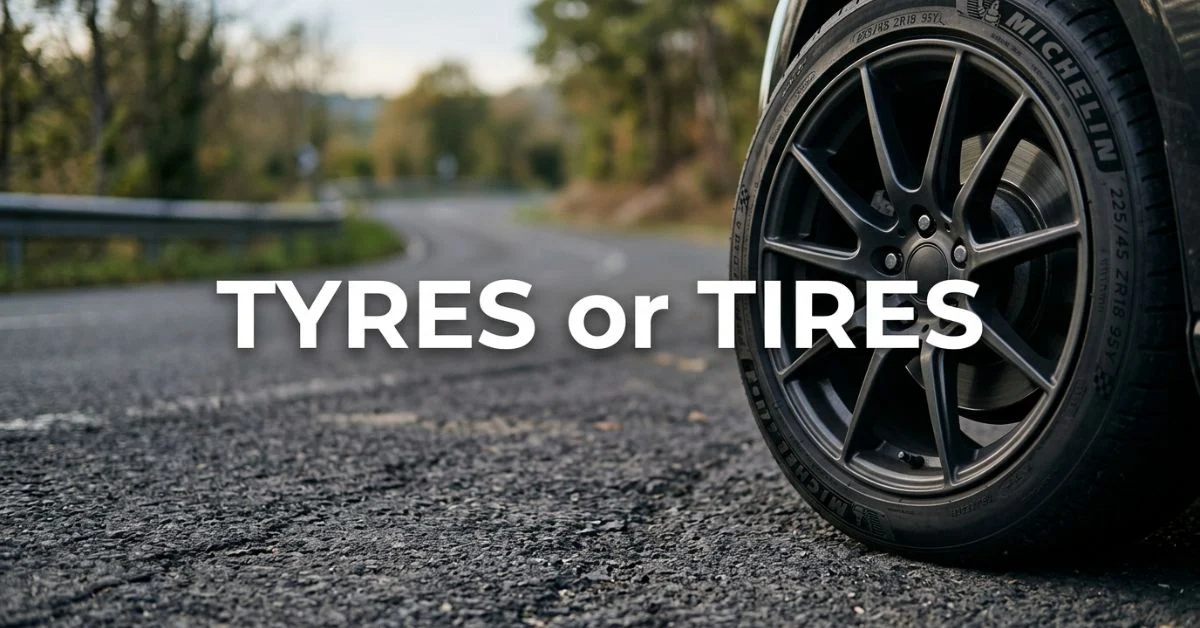
I remember reading a car blog where one article said “tires” and another said “tyres.”
At first, it felt like a mistake, but it wasn’t. That small difference actually depends on where you are in the world.
Many people search tyres or tires because both spellings appear online, in ads, and even on product labels. It creates confusion, which one is correct? Are they different?
This confusion matters, especially if you’re writing content, running a website, or even buying car parts.
Using the right spelling makes your writing look more professional and targeted to your audience.
In this guide, you’ll get a quick answer, clear meaning, spelling differences, real-world usage, and global trends.
By the end, you’ll know exactly when to use each form without second-guessing.
Quick Answer
👉 Tires = American English
👉 Tyres = British English
Meaning:
Both words refer to:
- The rubber covering around a wheel
- A key part of vehicles like cars, bikes, and trucks
- The component that provides grip and smooth movement
Example:
- I need to replace my car tires. (US)
- My car tyres are worn out. (UK)
✔️ Both are correct—just depends on region.
The Origin of Tyres or Tires
The word originally comes from “attire,” meaning something that covers or dresses a wheel.
How it evolved:
- Early English used tire for wheel covering
- British English later adopted tyre to distinguish it from the verb “tire” (to become tired)
- American English kept the original spelling tire
👉 This is why both spellings exist today.
British English vs American English Spelling
This is a classic spelling difference between regions.
| Version | Spelling | Usage |
|---|---|---|
| American English | Tires | Standard |
| British English | Tyres | Standard |
| Meaning | Same | Same |
Key Insight:
- No difference in meaning
- Only spelling changes based on location
Which Spelling Should You Use?
🇺🇸 For US Audience
👉 Use tires
🇬🇧 For UK & Commonwealth
👉 Use tyres
🌍 For Global Audience
👉 Choose one and stay consistent (or use region-based SEO)
✍️ Content Writing Tip:
- Target US traffic → tires
- Target UK traffic → tyres
✔️ Consistency matters more than choice.
Common Mistakes with Tyres or Tires
❌ Mistake 1:
Mixing both spellings in one article
✔️ Fix: Stick to one version
❌ Mistake 2:
Thinking they have different meanings
✔️ Fix: They mean the same thing
❌ Mistake 3:
Using wrong spelling for audience
✔️ Fix: Match region with spelling
Tyres or Tires in Everyday Examples
📧 Email:
- We need to replace the tires before the trip.
📰 News:
- New eco-friendly tyres are launching in the UK.
📱 Social Media:
- Just got new tires for my car 🚗
📄 Technical Writing:
- Both are acceptable (based on region)
Tyres or Tires – Google Trends & Usage Data
Search trends clearly show:
- Tires dominates in the United States
- Tyres dominates in the UK, Australia, and India
🌍 Global Insight:
- Both are widely searched
- Usage depends on geography
👉 This makes it an important keyword for regional SEO targeting.
Comparison Table: Tyres vs Tires
| Feature | Tires | Tyres |
|---|---|---|
| Region | USA | UK & Commonwealth |
| Meaning | Same | Same |
| Correctness | ✅ Correct | ✅ Correct |
| Usage | American English | British English |
FAQs
1. What is the difference between tyres and tires?
There is no difference in meaning, only spelling based on region.
2. Is tire American or British English?
Tire is American English.
3. Is tyre correct spelling?
Yes, it is correct in British English.
4. Which spelling should I use?
Use tires for US and tyres for UK.
5. Why are there two spellings?
Due to language evolution and regional differences.
6. Do tyres and tires mean the same thing?
Yes, both refer to the rubber covering of a wheel.
7. Can I use both in one article?
No, it’s better to stay consistent.
Conclusion
If you’ve been confused between tyres or tires, the answer is simple once you understand the context.
Both words refer to the same essential part of a vehicle, the rubber covering that provides grip, safety, and smooth movement.
The only real difference is regional usage. Tires is the standard spelling in American English, while tyres is used in British English and many Commonwealth countries.
Neither is wrong, but using the correct version for your audience makes your writing clearer and more professional.
Whether you’re creating content, writing a blog, or even running an eCommerce store, choosing the right spelling can improve user trust and SEO performance.
The key is consistency, pick one based on your target audience and stick with it.
Now that you understand the difference, you can confidently use the right spelling every time.

Eric White is a dedicated grammar enthusiast and content writer at Grammiffy, where he simplifies the rules of English for learners of all levels. With a clear, reader-first approach, Eric focuses on grammar fundamentals, common mistakes, sentence structure, and everyday language usage.