I remember reading a recipe that said “add fresh chile,” and I paused, was it supposed to be chili or chile? Later, I saw “chili powder” on a spice jar. That’s when the confusion really started.
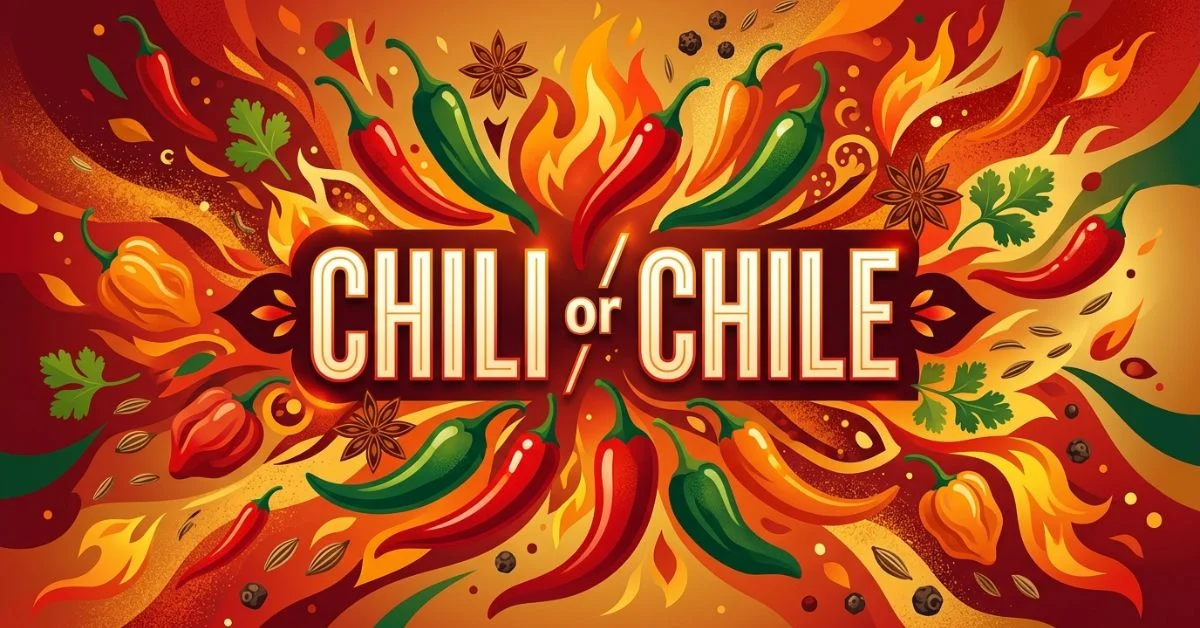
If you’ve ever wondered about chili or chile, you’re not alone. This is widely searched because both spellings are used in cooking, recipes, and food labels.
The tricky part is that both can be correct, but they are used in different contexts.
People search for chili or chile to understand the difference in meaning, spelling, and usage, especially in American English and regional cuisines.
Whether you’re cooking, writing a recipe, or just trying to be accurate, knowing the right term matters.
In this guide, you’ll learn the exact difference between chili vs chile, when to use each, and how to avoid common mistakes.
Quick Answer
- Chili ✔ = a spicy dish or general term for peppers
- Chile ✔ = the actual pepper (used in specific regions like New Mexico)
👉 Examples:
- “I made a bowl of chili.” ✔
- “Add roasted green chile.” ✔
✔ Chili = dish or general use
✔ Chile = pepper (regional/culinary term)
The Origin of Chili or Chile
The word comes from the Nahuatl (Aztec) word “chīlli,” meaning pepper.
- Chile stayed closer to the original spelling and is often used in traditional and regional contexts, especially in Mexican and Southwestern cuisine.
- Chili evolved in American English and became popular as the name of the famous dish chili con carne.
Over time, both spellings developed slightly different meanings.
British English vs American English Spelling
There’s no strict UK vs US rule, but usage differs by region and context.
| Feature | Chili | Chile |
|---|---|---|
| American English | Common | Regional (New Mexico) |
| British English | Less common | Also used |
| Meaning | Dish/general pepper | Actual pepper |
✔ Both spellings are accepted, but context matters more than location.
Which Spelling Should You Use?
Choosing between chili or chile depends on what you mean.
- Use chili when talking about:
- The dish (chili con carne)
- Chili powder
- General pepper usage
- Use chile when talking about:
- Fresh or roasted peppers
- Authentic or regional recipes
- Southwestern or Mexican cuisine
👉 Simple rule:
Food dish → chili
Actual pepper → chile
Common Mistakes with Chili or Chile
❌ Using both words interchangeably
✔ They have slightly different meanings
❌ Writing “chile” for the dish
✔ Use “chili” for the dish
Confusing with the country “Chile”
Capital “Chile” = country, not pepper
👉 Tip:
Lowercase “chile” = pepper
Uppercase “Chile” = country
Chili or Chile in Everyday Examples
Cooking:
- “Add chili powder to the sauce.”
- “Roast the green chile before serving.”
Recipes:
- “This chili recipe is very spicy.”
Food Labels:
- “Contains dried chili flakes.”
Restaurants:
- “Try our famous green chile burger.”
Chili or Chile – Google Trends & Usage Data
Search trends show strong interest in chili vs chile across food-related queries.
- “Chili” is more common globally
- “Chile” is popular in regions like New Mexico and Mexico
- High search volume in USA, UK, India, and Pakistan
✔ Insight:
Users search this keyword to understand correct culinary terminology
Comparison Table: Chili vs Chile
| Feature | Chili | Chile |
|---|---|---|
| Meaning | Dish / general term | Pepper |
| Usage | Common worldwide | Regional/culinary |
| Context | Recipes, food names | Ingredients |
| Example | Chili con carne | Green chile |
FAQs
1. Is it chili or chile pepper?
Both are used, but “chile pepper” is more traditional.
2. What is the difference between chili and chile?
Chili refers to the dish; chile refers to the pepper.
3. Which spelling is correct?
Both are correct depending on context.
4. Is chile used in the US?
Yes, especially in New Mexico and Southwestern cuisine.
5. What is chili powder?
A spice blend made from dried ground peppers.
6. Is Chile a country?
Yes, capital “Chile” refers to a country in South America.
7. Which should I use in recipes?
Use “chili” for dishes and “chile” for peppers.
Conclusion
The difference between chili or chile may seem small, but it’s important for clear communication, especially in cooking.
While both words come from the same origin, their meanings have evolved over time.
“Chili” is widely used to describe the popular spicy dish and is more common in everyday language.
On the other hand, “chile” is often used to refer specifically to the pepper itself, especially in authentic or regional cuisines like those found in the American Southwest and Mexico.
Understanding this distinction helps you use the right term in the right context.
Whether you’re following a recipe, writing a food blog, or ordering at a restaurant, choosing between chili or chile correctly adds clarity and professionalism.
The key takeaway is simple: use chili for dishes and chile for peppers. Once you remember this rule, you’ll never be confused again.