Ever typed the word “inbalance” and wondered if it looked a bit wrong?
That small doubt is very common, especially for students, bloggers, writers, and English learners who want their writing to be correct and professional.
Many words in English use prefixes like in- and im-, which makes spelling confusing. That’s exactly why people search for inbalance or imbalance, to find the correct version and avoid mistakes.
The truth is simple, but often misunderstood. One spelling is correct, and the other is not used in standard English.
Knowing the difference helps you write clearly, whether you’re talking about health, emotions, or even finance.
In this guide, everything is explained in a simple and easy way so you can use the correct word confidently every time.
Quick Answer
Meaning
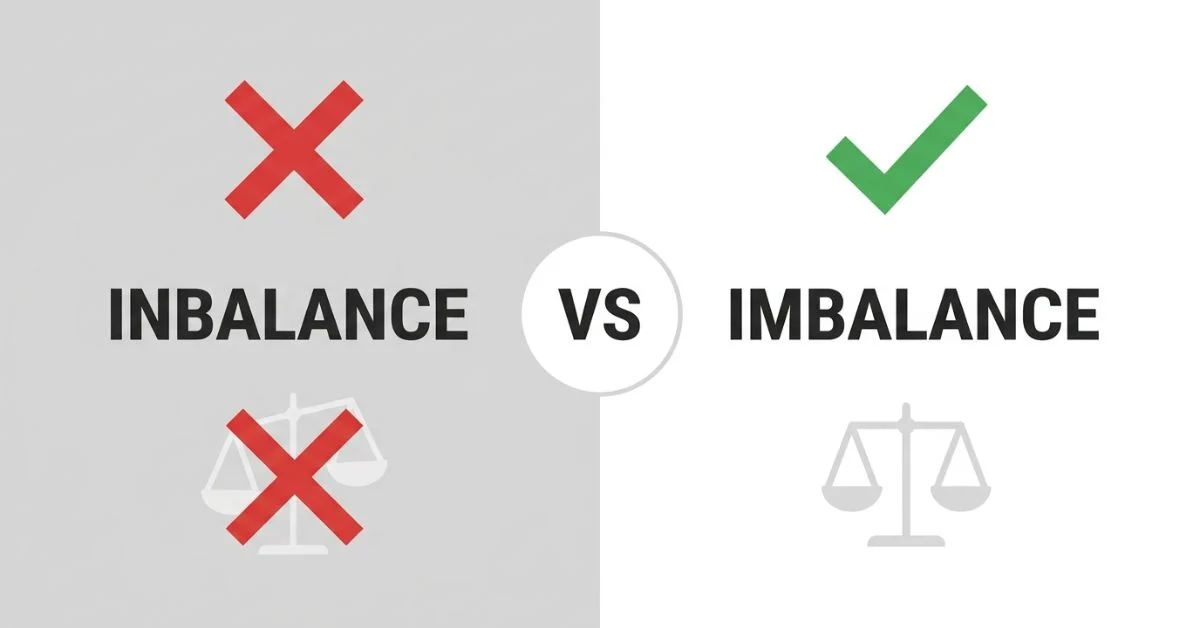
- ❌ Inbalance = incorrect spelling
- ✅ Imbalance = correct word meaning lack of balance
Examples
- There is an imbalance in the system.
- Hormonal imbalance can affect your health.
Final Answer
Always use imbalance. “Inbalance” is not correct in standard English.
The Origin of Inbalance or Imbalance
History
The word comes from:
- im- (prefix) = not
- balance = equal state
Why “Im” Instead of “In”
The prefix changes from in- to im- before words starting with b, m, or p.
👉 That’s why:
- balance → imbalance
- not “inbalance”
British English vs American English Spelling
Usage Comparison
| Version | Correct Spelling |
|---|---|
| British English | Imbalance |
| American English | Imbalance |
Key Insight
There is no difference between US and UK English for this word.
Which Spelling Should You Use?
Correct Choice
Always use imbalance in all contexts.
Writing Tip
If a word starts with b, the prefix often becomes im- instead of in-.
Common Mistakes with Inbalance or Imbalance
Using “Inbalance”
This is the most common spelling mistake.
Ignoring Prefix Rules
Many writers don’t know that prefixes change based on letters.
Typing Errors
Sometimes “inbalance” appears due to habit or autocorrect issues.
Inbalance or Imbalance Meaning (Detailed)
Imbalance Meaning
- A lack of equal balance
- A state where things are uneven
Types of Imbalance
- Health → hormonal imbalance
- Finance → economic imbalance
- Emotions → emotional imbalance
Inbalance or Imbalance in Everyday Examples
Health
- A hormonal imbalance can cause fatigue.
Workplace
- There is a workload imbalance in the team.
Economy
- The country faces a trade imbalance.
Social Media
- Feeling an emotional imbalance lately.
Inbalance or Imbalance – Google Trends & Usage Data
Popularity
- Imbalance is widely used globally
- Inbalance appears mostly as a mistake
Search Insight
Many people search “inbalance” to confirm the correct spelling.
Comparison Table: Inbalance vs Imbalance
| Feature | Inbalance | Imbalance |
|---|---|---|
| Correctness | ❌ Incorrect | ✅ Correct |
| Meaning | None | Lack of balance |
| Usage | Mistake | Standard English |
| Popularity | Low | Very High |
FAQs
Is inbalance a real word?
No, inbalance is not a correct word in standard English.
What is the correct spelling: inbalance or imbalance?
The correct spelling is imbalance.
Why is it spelled imbalance and not inbalance?
Because the prefix “in-” changes to “im-” before words starting with “b.”
What does imbalance mean?
It means a lack of balance or equality.
Can I ever use inbalance?
No, it should always be avoided in formal and informal writing.
Where is imbalance used?
It is used in health, finance, emotions, and general situations.
Conclusion
The confusion between inbalance or imbalance is very common, but the answer is simple. Only one spelling is correct, and that is imbalance.
The mistake happens because English prefixes can change form depending on the letters that follow.
In this case, the prefix in- becomes im- before the letter b, which is why “imbalance” is correct.
Using the wrong spelling can make your writing look unprofessional, especially in formal or academic contexts. That’s why it’s important to understand and remember this rule.
Once you know this, it becomes easy to avoid the mistake. From now on, you can confidently use imbalance in any situation, whether you’re writing about health, emotions, or everyday life.

Bryan A. Garner is a renowned grammar expert, lexicographer, and author at Grammiffy, where he makes English rules easy to understand for learners and writers of all levels.
With a focus on clarity, proper usage, and effective communication, Bryan helps readers master grammar, style, and everyday writing with confidence.