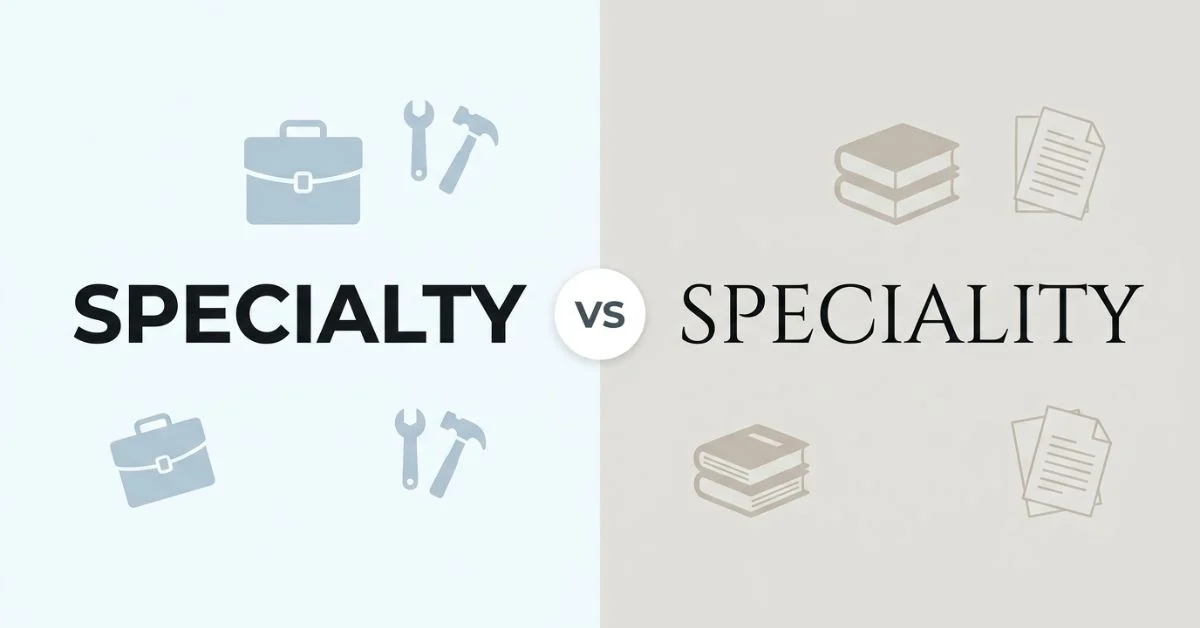
At first glance, “specialty” and “speciality” seem like two completely different words. But in reality, they carry the same meaning, which often leaves writers confused about which one to use.
If you’ve searched specialty or speciality, you’re likely trying to understand the correct spelling and whether one is more appropriate than the other. This confusion is common because both versions appear in books, academic writing, and even professional contexts.
The difference isn’t about meaning—it’s about regional usage and modern preference. One spelling is more common in American English, while the other has roots in British English.
In this guide, everything is explained in a simple and clear way. You’ll learn the meaning, differences, usage rules, and real examples so you can confidently choose the right word every time.
Quick Answer
Meaning
Both specialty and speciality mean:
- A specific area of skill or expertise
- A field of study or profession
- Something a person or business is known for
Examples
- Her specialty is digital marketing.
- This dish is the restaurant’s speciality.
Final Answer
Specialty is preferred in modern usage, especially in American English.
Speciality is used in British English but is less common today.
The Origin of Specialty or Speciality
History
Both words come from the root word “special,” which means something unique or important.
Development
- Speciality developed earlier with the “-ity” ending
- Specialty later became popular, especially in American English
Why Two Forms Exist
English often creates variations based on pronunciation and regional preferences. Over time, usage shifted toward the simpler and more widely accepted specialty.
British English vs American English Spelling
Usage Comparison
| Version | Spelling | Usage |
|---|---|---|
| American English | Specialty | Standard |
| British English | Speciality | Traditional |
| Global Trend | Specialty | Increasingly common |
Key Insight
Even in the UK, specialty is becoming more widely used, especially in professional and global contexts.
Which Spelling Should You Use?
Global Writing
Use specialty for better clarity and wider acceptance.
American English
Always use specialty.
British English
Use speciality in traditional contexts, but specialty is also acceptable and increasingly common.
Writing Tip
For blogs, SEO, and professional content, specialty is the safer choice.
Common Mistakes with Specialty or Speciality
Mixing Both Spellings
Avoid using both versions in the same article.
Assuming Different Meanings
Both words have the same meaning. The difference is only in spelling.
Using the Less Common Form
Using speciality in global content may confuse some readers.
Specialty or Speciality Meaning (Detailed)
Usage in Context
Both words are used to describe:
- A person’s main skill
- A professional field
- A unique product or service
Examples
- His specialty is software development.
- Cooking is her speciality.
Common Fields
- Medical specialty
- Academic specialty
- Business specialty
Specialty or Speciality in Everyday Examples
- Her specialty is handling client relations.
News
- The doctor chose cardiology as his specialty.
Social Media
- Baking cakes is my specialty 🎂
Formal Writing
- This area remains his core speciality in research.
Specialty or Speciality – Google Trends & Usage Data
Global Trends
Search data shows that specialty is used more frequently worldwide.
Regional Insight
- United States → Specialty dominates
- United Kingdom → Both used, but specialty is growing
Conclusion
Modern English is shifting toward specialty as the standard form.
Comparison Table: Specialty vs Speciality
| Feature | Specialty | Speciality |
|---|---|---|
| Meaning | Same | Same |
| Region | US | UK |
| Popularity | High | Lower |
| Modern Usage | Preferred | Less common |
FAQs
What is the difference between specialty and speciality?
There is no difference in meaning. The only difference is spelling based on regional usage.
Is speciality correct?
Yes, it is correct in British English, but it is less commonly used today.
Which spelling should I use globally?
Use specialty because it is more widely accepted.
Is specialty American English?
Yes, it is the standard spelling in American English.
Can I use both in one article?
No, it’s better to stay consistent with one spelling.
Why is specialty more common now?
Because modern English prefers simpler and globally accepted forms.
Conclusion
If you’ve been confused between specialty or speciality, the key takeaway is simple. Both words mean the same thing and can be used to describe a person’s skill, profession, or area of expertise.
The real difference lies in usage and modern preference. Specialty is the standard spelling in American English and is now widely used across the world.
On the other hand, speciality is more traditional and mainly found in British English, but it is becoming less common over time.
For most writing purposes, especially blogs, SEO content, and professional communication, specialty is the better choice. It keeps your writing clear, modern, and globally understandable.
By choosing the right spelling and staying consistent, you can improve both readability and credibility in your writing.

Bryan A. Garner is a renowned grammar expert, lexicographer, and author at Grammiffy, where he makes English rules easy to understand for learners and writers of all levels.
With a focus on clarity, proper usage, and effective communication, Bryan helps readers master grammar, style, and everyday writing with confidence.