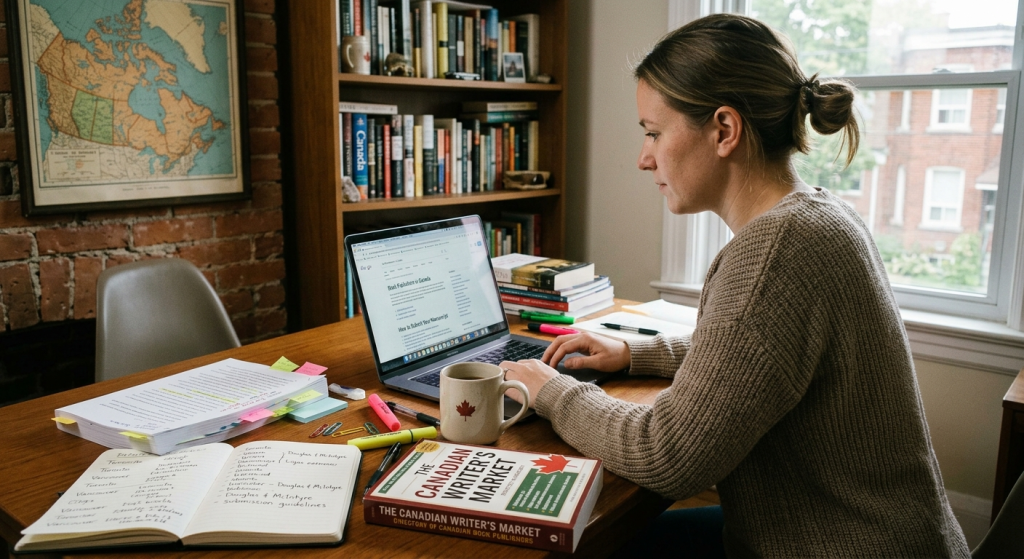
What should authors look for when choosing a publisher?
Selecting the right publisher in Canada requires an initial assessment of what publishers provide in terms of services and how these correspond to your requirements. The appropriate publishing house will give you a clear idea about editing, designing, printing, distribution, rights management, royalties, and marketing.
How can authors decide what type of publishing they need?
Identifying the publishing path which will be suitable for the manuscript and for the author’s career is the initial step. In the case of traditional publishing, the manuscript needs to be submitted to a well-known publishing house. It is common practice that the publishing house finances all the expenses for the book publication.
With self-publishing, the author receives an opportunity to have more control over his or her manuscript. KDP stands for the publication of books and ebooks not having any contract with the publishing company.
Where should Canadian authors research potential publishers?
Authors can begin with publisher websites, industry directories, writers’ organizations, literary events, and recommendations. A publisher’s website should explain its submission requirements, publishing process, services, and business model clearly. Look for specific information rather than promises about becoming a bestseller.
Research should also extend beyond the publisher’s own website. Search for books released by the company and examine their quality, availability, formats, and distribution. Check whether titles appear through reputable bookstores, libraries, and online retailers.
What should authors check before submitting a manuscript?
Requirements for submission could differ greatly. For some publishers, full manuscripts are required; for others, queries, synopses, sample chapters, or proposals will be necessary. Adhering to submission guidelines shows professionalism and ensures timely submission.
Before making a submission, one needs to take a look at the catalog of the chosen publisher and see if the genres and audiences of that publisher correspond to the manuscript. For instance, a children’s publisher might not be a good choice for academic work.
How can authors evaluate contracts and costs?
A publishing agreement deserves careful attention before it is signed. Authors should understand copyright ownership, licensed rights, royalty calculations, agreement length, and what happens if the book goes out of print. Territory and format rights matter because print, ebook, audiobook, translation, and international rights may be separate.
Costs should be transparent. If an author pays for editing, cover design, formatting, printing, distribution, or marketing, every charge should be explained in writing. Be cautious about guarantees of large sales, bestseller status, or unusually high earnings.
How do Canadian publishing options compare?
There are various combinations of control, costs, assistance, and responsibility when using publishing routes. The right choice varies depending on the needs of each author.
| Publishing route | Control of the author | Costs involved upfront | Professional assistance |
| Traditional | Less | Usually small | Big |
| Self | More | Author pays for all | Variable |
| Hybrid/assistance | Moderate to more | Variable | Usually big |
This chart enables one to limit their choices before contacting any of the companies. It can also distinguish the investor publisher from the service provider company.
What questions should authors ask before choosing a publisher?
Ask who will edit the manuscript, who creates the cover, where the book will be printed, which distributors will receive it, and how sales are reported. Ask whether the book will reach major online retailers and whether the publisher supports ebook and print-on-demand formats.
Ask about marketing as well. Determine what is included rather than assuming packages contain advertising, publicity, or bookstore placement.
Why should authors verify a publisher’s track record?
A strong track record can provide evidence of reliability. Examine published books, author testimonials, retailer listings, editorial quality, and company history. Independent reviews can reveal details promotional material may not mention.
Authors researching Canadian book publishing should also consider whether a potential partner understands Canadian readers, distribution channels, regional markets, and the practical requirements of publishing in Canada. A publisher need not be located in a particular province; the key question is whether its services and distribution strategy suit the author’s audience.
When is self-publishing a practical alternative?
Authors should also consider the level of communication a publisher provides throughout the process. Clear timelines, regular updates, and accessible support can make publishing much easier, particularly for first-time authors. It is useful to ask how often authors receive progress reports and who will be responsible for answering questions about production, distribution, or sales.
Another important consideration is the publisher’s approach to long-term book availability. Authors should find out whether their books remain available through print-on-demand, ebook platforms, or other distribution channels after the initial launch. A publishing partnership should ideally support the book beyond publication day and provide a practical strategy for maintaining its availability.
Self-publishing may be appropriate when an author wants control over pricing, release timing, cover design, metadata, and marketing decisions. KDP is one option for distributing Kindle ebooks and print-on-demand books through Amazon. Other platforms can expand reach to retailers and libraries.
Authors comparing amazon direct publishers should distinguish between Amazon’s publishing platform and independent companies that offer publishing services involving Amazon. Understanding who controls the account, rights, files, pricing, and royalties is essential before paying for any package or transferring publishing responsibilities.
How can authors make the final decision?
After researching several options, create a checklist covering contract terms, costs, rights, services, distribution, communication, and timelines. Compare each publisher using the same criteria.
A good publisher should communicate clearly, answer reasonable questions, provide transparent terms, and demonstrate credible experience. Verifying these points can reduce financial and contractual risks while helping authors choose a publishing path that supports their book’s long-term potential.
Conclusion
Choosing a book publisher in Canada calls for research more than a quick choice. The author needs to know his/her intentions in publishing, study the various types, check the company’s history, look at the contracts, and find out precisely what the services are and how much they cost. It does not matter whether an author wants to be traditionally published, self-publish, or work with a professional; the correct one will give you the terms and the route to getting read.
