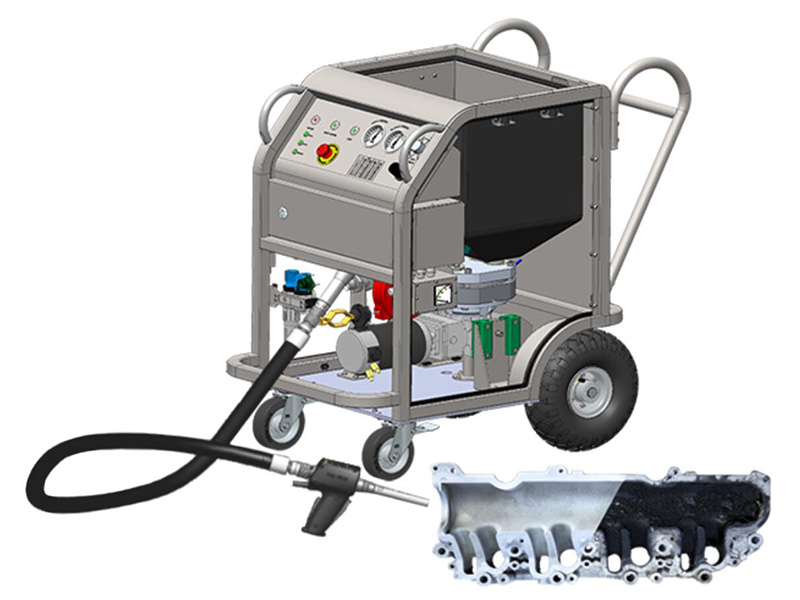
Walk through a restoration shop or a bridge maintenance yard today and you may hear something unexpected: silence, or close to it, where the roar of a media cabinet used to fill the room. Rust removal, paint stripping, mold surface prep, and pre-weld cleaning have been the province of sandblasters, chemical strippers, and wire wheels for decades. Now a fiber laser mounted to a handheld pistol vaporizes the same coatings in seconds, without media, without runoff, and without the substrate damage that abrasive methods leave behind. This shift is not marketing hype, and it is not a niche trick. Refinishers, tool and die shops, and infrastructure crews are quietly rebuilding their processes around a technology that solves problems the previous methods only masked. This article looks at what actually drives the switch, what the trade-offs still are, and how a shop should evaluate whether the change is worth it for the work it does most often.
The Real Cost of Abrasive Blasting
Sandblasting looks cheap until the full ledger comes out. Media has to be purchased, contained, recovered, screened, and eventually disposed of when it becomes contaminated with the coating it removed. Booths need dust collection systems, filter cartridges, and downtime for cleanout. Operators wear supplied-air respirators because silica-bearing dust is a lifetime health hazard, and the coatings coming off surfaces frequently contain lead, chromium, or other regulated materials that turn ordinary shop waste into scheduled waste. Every one of those costs is invisible on the day the blasting cabinet is bought, and they compound over a decade of use. Laser cleaning removes the coating without introducing media at all, which eliminates the containment, the disposal, and much of the respiratory hazard in a single change of process.
Substrate Damage That Sanders Cannot Avoid
Abrasive methods work by removing material. That is fine when the substrate is thick structural steel, but on thin sheet, precision castings, historical artifacts, or heat-treated tooling, every pass erases a measured amount of the part along with the coating. A laser interacts differently: the beam couples to the darker, higher-absorption coating and passes almost transparently over the reflective metal beneath. The result is a substrate that comes out of cleaning with its original tolerances, its heat treatment intact, and its surface texture unaltered. Restoration workshops in particular have adopted the technology because it is the first method that respects the original geometry of the object being cleaned.
Environmental and Regulatory Advantages
Environmental compliance is a slow squeeze on shops that use chemical strippers or lead-bearing media. Methylene chloride is phased out in most consumer applications, hazardous waste manifests grow more detailed each year, and inspectors ask harder questions about capture and containment. Laser cleaning generates a fine particulate that can be captured by a HEPA extraction unit sitting next to the operator, and the captured residue is a small fraction of the volume that abrasive blasting produces. Municipal water systems no longer see runoff from paint stripping when a laser handles the job, which alone has moved several bridge maintenance contractors to make the switch on infrastructure projects.
Consumables and Downtime
A laser cleaning system consumes electricity, protective cover slides for the optics, and the occasional replacement of a scanning galvanometer over its service life. Compare that inventory to grit, tips, hoses, filter cartridges, and respirator canisters, and the parts room shrinks noticeably. Downtime shifts too. Instead of shutting a cabinet for media reclaim and dust cleanout, an operator changes a cover slide in under a minute and returns to work. Shops that measure output in parts per shift rather than parts per hour see the difference most clearly.
What Laser Cleaning Does Not Solve
Honesty matters here. A laser is not a universal answer. Very thick coatings, heavy rust scale over quarter-inch or more of steel, and organic buildup like caked grease still respond faster to mechanical removal or chemical loosening. Some coatings that are transparent to the laser wavelength — certain clear polymers, thin oil films — need a different approach entirely. Speed on large flat surfaces is another consideration: a two-hundred-watt handheld unit strips paint at a rate that suits detail work and localized cleaning but cannot outpace a media blast on a full trailer. The engineering answer is often to combine methods, using the laser where its advantages compound and reserving the older tools for bulk work.
Choosing the Right Power Level
Power ratings on laser cleaning heads range from around fifty watts to two thousand watts, and matching the source to the workload is more important than buying the biggest unit available. Fifty to one hundred watts handles precision cleaning, mold surface refresh, and delicate substrates. Two hundred to five hundred watts covers the majority of production work in restoration, welding preparation, and coatings removal on automotive and industrial parts. Above one thousand watts, the machine is dedicated to heavy industrial cleaning where throughput is the ruling metric. Xlaserlab and other manufacturers offer sizing guidance based on the material and coating rather than headline wattage, and that conversation is worth having before any purchase.
Getting Ready for the Change
Shops that transition well plan the workspace before the crate arrives. Enclosure or curtains define the laser-controlled area, wavelength-appropriate eyewear is issued to every operator and to anyone who might walk through, and an extraction hood is positioned to capture vapor at the source. Training on the handheld gun takes hours rather than weeks, but training on process planning — which parts get lasered, which stay with the old methods, how to log the change for compliance — takes longer and pays back over years.
Weighing the Switch on Real Work
The trade from sandblasters to lasers is not about status or novelty. It is about a specific set of jobs where the older method left costs on the table: substrate damage, hazardous waste, health risk, and downtime. When a shop counts those costs honestly for the mix of work it actually handles, the laser wins on more jobs than the specification sheets predicted. On the jobs where the older methods still win — bulk stripping, thick scale, coatings the beam ignores — the decision is to keep both tools rather than to force one solution across every task. That combination approach is why the trend is quiet and steady rather than a sudden switch, and why shops that made the change in the last two years rarely look back.
