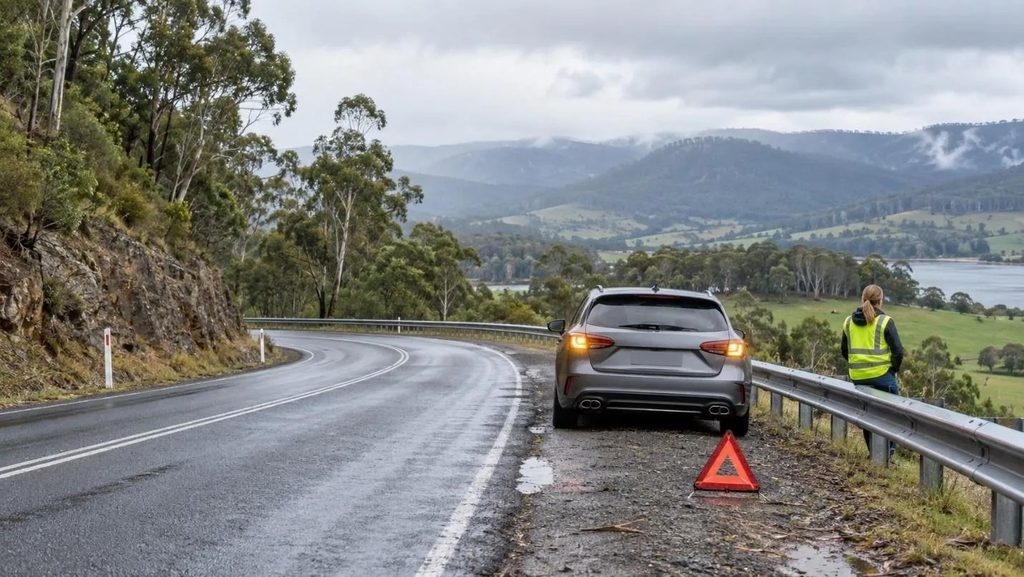
Tasmania offers some of Australia’s most memorable driving routes, but its roads can also present unfamiliar challenges. Winding highways, changing weather, wildlife and limited mobile coverage can turn a minor problem into a stressful situation, particularly outside major towns.
Whether you are commuting locally or exploring the state on a road trip, preparation is essential. The following roadside safety tips can help reduce the likelihood of an incident and keep you safer if your vehicle breaks down.
Check Your Vehicle Before a Long Journey
Many roadside problems can be prevented through basic vehicle checks. Before travelling beyond your usual routes, inspect the parts of the vehicle most likely to affect safety or reliability.
Check the following:
- Tyre pressure and tread depth
- Engine oil and coolant levels
- Windscreen washer fluid and wiper condition
- Headlights, brake lights and indicators
- Battery condition
- Brakes
- Fuel or battery charge level
Your spare tyre should also be correctly inflated and accompanied by a functioning jack and wheel brace. However, having the necessary equipment does not mean you should attempt a roadside tyre change in an unsafe location.
It is also sensible to carry drinking water, warm clothing, a torch, a first-aid kit, reflective clothing and a charged power bank. Tasmania’s weather can change quickly, so your emergency supplies should suit conditions beyond those expected when you leave.
Plan for Longer and More Demanding Drives
Distances on a map do not always reflect how long a Tasmanian journey will take. Narrow lanes, steep gradients, winding sections and lower speed limits can extend travel times, particularly in rural and mountainous areas.
Plan your route before departure and check for closures, roadworks or severe weather warnings. The Tasmanian Government’s road and traffic information can help motorists identify disruptions before beginning a journey.
Allow enough time to reach your destination without rushing. Trying to recover lost time by speeding or taking corners too quickly increases risk, especially on an unfamiliar road.
Let someone know where you are going and when you expect to arrive. Downloading an offline map is also worthwhile because mobile reception may be unreliable in remote areas.
Know What to Do During a Breakdown
If your vehicle develops a problem, remain calm and look for a safe place to stop. Move as far away from traffic as reasonably possible without entering unstable ground, a deep verge or another hazardous location.
Turn on your hazard lights, apply the handbrake and switch off the engine. Before opening a door, check carefully for approaching traffic. If you cannot repair the problem safely or the vehicle is no longer roadworthy, contact a provider offering towing Tasmania services and clearly explain where you are located.
Useful location details may include:
- The road name
- Your direction of travel
- The nearest town or intersection
- A nearby landmark
- A kilometre marker or roadside sign
- GPS coordinates from your phone
- Details of the vehicle and the suspected problem
You should call Triple Zero (000) if anyone is injured or the stopped vehicle presents an immediate danger to other road users.
Choose the Safest Place to Wait
There is no single safe waiting position for every breakdown. The right decision depends on the road, traffic speed, weather and surrounding terrain.
If the vehicle is well away from moving traffic, remaining inside with your seatbelt fastened may provide protection. On the other hand, if there is a safe route to a location behind a roadside barrier, leaving the vehicle may be more appropriate.
Avoid standing:
- In an active traffic lane
- Directly in front of or behind the vehicle
- Between the vehicle and a roadside barrier
- On the roadward side of the vehicle
- Where approaching drivers cannot see you
Do not walk along a high-speed road unless remaining near the vehicle creates a greater and more immediate risk. If you are uncertain, contact emergency services and follow their directions.
Make the Vehicle Easy to See
A stopped vehicle can be difficult for approaching motorists to detect at night, during heavy rain or around a bend. Activate the hazard lights as soon as you recognise that the vehicle is losing power or must stop.
If you have a reflective vest, put it on before leaving the vehicle. A warning triangle may also improve visibility, but only place it when you can do so without walking into traffic or exposing yourself to danger.
Keep the vehicle’s position and surrounding conditions in mind when speaking with a towing operator. Mention if you are stopped near a blind corner, on a narrow shoulder or in another hazardous location.
Reduce Your Speed in Poor Conditions
Rain, frost, fog and occasional snow can reduce both visibility and grip on Tasmanian roads. Conditions may also vary significantly between low-lying areas and elevated routes.
When visibility or traction deteriorates:
- Reduce your speed gradually
- Increase the distance from the vehicle ahead
- Use headlights when necessary
- Avoid sudden braking or steering
- Take bends more cautiously
- Pull over safely if conditions become too severe
Cruise control may not be appropriate on wet, icy or winding roads because the driver needs direct and responsive control of the vehicle.
Watch for Wildlife
Wildlife can enter the road with little warning, particularly around dawn, dusk and at night. Drivers should pay attention to warning signs and scan the road edges in rural or forested areas.
Reducing speed provides more time to identify a hazard and respond safely. If an animal appears ahead, controlled braking is generally safer than an abrupt swerve that could send the vehicle into another lane, off the road or into a fixed object.
After a collision, stop only when you can do so safely. Check passengers for injuries and call emergency services if required. Do not approach an injured animal, as frightened wildlife can behave unpredictably.
Adjust Your Driving on Gravel Roads
Loose gravel reduces traction and can increase stopping distances. It may also cause the vehicle to slide when the driver brakes sharply or changes direction suddenly.
Slow down before entering a bend rather than braking heavily while turning. Maintain a generous following distance to avoid dust and stones thrown by other vehicles. Keep both hands on the steering wheel and make smooth, measured inputs.
Drivers should also watch for potholes, corrugations, soft road edges and fallen branches. Before using a remote road, confirm that it is open and suitable for your vehicle.
Avoid Driving While Tired
Fatigue can affect judgement, reaction time and awareness of hazards. Long stretches of quiet road may make tiredness harder to recognise until concentration has already deteriorated.
Warning signs include repeated yawning, difficulty maintaining speed, drifting within the lane and failing to remember recent sections of the journey. Opening a window or increasing the music volume does not address genuine fatigue.
Stop somewhere safe and take a proper break. If necessary, delay the journey or share the driving with another licensed person.
Expert Insight: Personal Safety Comes First
According to Joshua Harrison, Founder of Underground Towing & Salvage, drivers should prioritise personal safety before inspecting a disabled vehicle. On narrow, unfamiliar or poorly lit roads, leaving the vehicle without first checking surrounding traffic can expose occupants to greater danger than the original breakdown. He recommends moving as far from traffic as safely possible, activating the hazard lights and clearly describing the location and road conditions when requesting assistance.
Respond Carefully After a Collision
Following a collision, stop and determine whether anyone is injured. Call Triple Zero when medical assistance is needed or when damaged vehicles, debris or spilled fluids are creating an immediate road hazard.
When it is safe:
- Turn on the hazard lights
- Move away from active traffic
- Exchange the required details with the other parties
- Photograph the vehicles and surrounding scene
- Record the time, location and road conditions
- Contact your insurer where appropriate
Do not continue driving if the vehicle has damaged tyres, steering, suspension, lights or leaking fluids. Damage that appears minor from outside may still make the vehicle unsafe.
Through years of assisting motorists after breakdowns and collisions, Underground Towing & Salvage has observed that accurate location information and a clear description of the vehicle’s condition can help a recovery operator prepare the appropriate equipment before arriving.
Preparation Makes Roadside Emergencies Easier to Manage
Driving around Tasmania can involve changing conditions, isolated routes and hazards that are uncommon on familiar urban roads. A well-maintained vehicle, realistic travel plan and properly stocked emergency kit can reduce the likelihood of becoming stranded.
If a breakdown or collision does occur, focus first on moving away from danger, making the vehicle visible and communicating your location accurately. Knowing how to respond can prevent a manageable roadside problem from developing into a much more serious incident.
