Why Concert Wardrobes Need Their Own Rules
Standing in a packed venue with a cold beer halfway down your shirt teaches you something fast. Your everyday wardrobe and your concert wardrobe should follow different logic entirely. The pieces that work for a coffee shop fail under crowd pressure, temperature swings, and twelve hours on your feet. So smart concertgoers build a small kit specifically for live music. Quality Zach Bryan tour merch sits at the center of that kit because it works double duty as both authentic concert wear and serious daily clothing. Plus, the right tour shirts come from artists you actually care about, which makes them carry meaning that no styled-from-a-magazine outfit can replicate. The concert wardrobe problem isn’t just about style, though. Your pieces need to handle real conditions. Outdoor venues drop 20 degrees after sundown. Indoor pits get sweaty within an hour. Standing for five hours straight tests every seam and ribbing in your outfit. Phones, wallets, and IDs need pockets that don’t sag. Plus, you want to look good in photos that will live forever on someone’s camera roll. Mall-quality clothing fails at almost every one of these tests. Specialty pieces tend to hold up because they’re built denser and stitched better from the start. The rest of this guide breaks down how to assemble a concert kit that survives real shows. Plus, the specific pieces that earn their space, the layering formulas that work outdoors and in, and the honest limitations of trying to dress well in conditions designed to test clothing. Honestly, I think shows are where the value of quality clothing is most evident. At home, you can change anytime. At a venue, you wear what you brought, often for longer than you planned.
The Three-Layer Concert Formula That Always Works
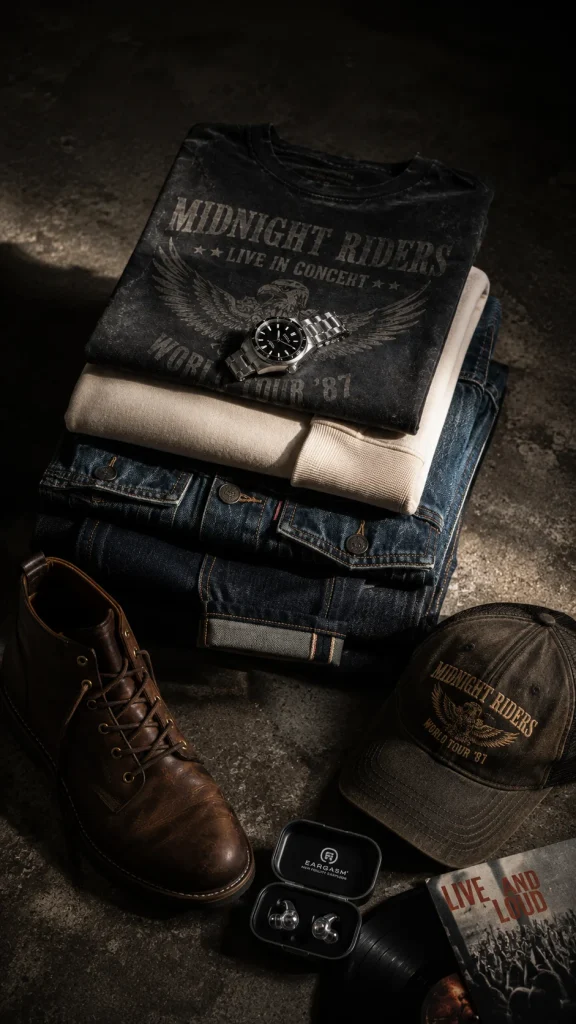
A solid concert outfit uses three layers that come on and off through the night. So getting the formula right means you adapt to temperature swings without carrying anything extra. Layer one is your statement piece, usually a tour tee or quality graphic shirt that sets the visual identity of the outfit. This is the layer that shows in photos and signals what you’re actually there for. Layer two is your warmth layer, typically a heavyweight sweatshirt or hoodie in a neutral color that pairs with whatever’s underneath. This layer comes on when the venue cools or the sun drops. It also handles the sticky middle hour where the crowd is dense, but the air is starting to cool. Layer three is your outerwear, usually a denim trucker jacket, chore coat, or light puffer that handles the coldest part of the night and the walk back to wherever you’re staying. The trick is making sure all three layers actually work together. A graphic tee should peek above the sweatshirt neckline. The sweatshirt should drape cleanly under the outer jacket without bunching at the waist. The colors should sit in a coherent palette rather than fighting each other in photos. So picking neutral mid and outer layers (cream, faded black, charcoal, olive) gives you maximum flexibility with whatever tour shirt you choose to wear underneath. Fabric weight also matters across the layers. A 220 gsm tour tee, a 400 gsm sweatshirt, and a 12 oz denim jacket layer cleanly because each piece has its own structural integrity. Lighter weights would collapse on each other. Heavier weights would bulk up too much. The formula works because the layer weights cascade properly, and your body temperature stays regulated even as conditions shift around you over a long night.
Your Pre-Show Packing Checklist for Any Concert
Before you head out the door for a concert, run through a checklist of what to wear and bring. So I built this list after enough freezing nights and soaked shirts to know what actually matters. Here are the seven essentials that cover almost any indoor or outdoor show:
- A tour tee or quality graphic shirt in a faded neutral color that fits well and has authentic personal meaning.
- A heavyweight sweatshirt or hoodie in cream, charcoal, or faded black that pairs with your tour shirt without color clashing.
- A denim trucker jacket or chore coat as an outer layer that handles cooler night air and packs flat if needed.
- Broken-in jeans or denim shorts, depending on the weather, ideally something that’s already been worn enough to be comfortable for six hours straight.
- Comfortable boots or sneakers that you’ve already tested for at least two hours of standing without pain.
- A reliable watch to track when openers are wrapping up and when your favorite set actually starts.
- A small crossbody bag or fanny pack for phone, wallet, and ID without bulging your pockets.
That’s the kit. Add a beanie or cap depending on the weather, and you’ve covered every realistic concert situation. Total cost done well runs $400 to $700 if you build it with specialty pieces, which sounds steep until you remember the pieces also work in your daily wardrobe outside of concerts. Cheap fast-fashion alternatives cost about $200 total but typically last two or three shows before something fails. So the math heavily favors building with quality from the start. One concrete tip: always wear your bulkier pieces (boots, jacket, sweatshirt) on the way to the venue rather than carrying them. Coat check costs $5 to $10 per item at most venues, and you’ll want every layer accessible as conditions change.
The Tour Tee: Why Authenticity Beats Trends Every Time
The tour tee is the piece that defines your concert outfit, and getting it right matters more than any other single choice. So picking authentic merch over generic “vintage-look” tees from mall brands makes a real visible difference. A piece from Zach Bryan’s tour merch demonstrates what authentic concert merch should look like. Heavyweight 220 to 250 gsm cotton that holds shape through repeated wear. Real screen printing on the graphic rather than heat transfers that crack within months. Tour dates and city listings on the back that tie the piece to a specific moment, rather than just looking like a stylized graphic. Plus, the construction details (proper sleeve hems, double-stitched collar, reinforced shoulder seam) match what you’d find at a mid-tier streetwear label rather than at a concession stand from 2010. The visible authenticity of real tour merch reads differently to anyone paying attention. Fans of the artist recognize it immediately and tend to talk to you. Non-fans still register it as legitimate rather than performative because the graphic, the fabric, and the fit all signal real rather than styled. Compare that to a fashion brand’s interpretation of “tour-style” graphic tees. The fabric runs thinner. The print is heat-transferred and cracks within months. The graphic references nothing real, which lands as posturing the moment anyone with actual taste looks at it. So the price difference between a $40 authentic tour tee and a $25 fashion-brand alternative pays itself back almost immediately in how the piece reads on you. Plus, real tour pieces hold their value differently. A specialty fashion shirt eventually goes out of style. A tour shirt from an artist you actually love only gets better with age.
Concert-Wear Survival Signals to Watch For
Specific quality signals matter more at concerts than in daily wear because the conditions test every weak point in your clothing. So watch for these specific signs when you’re picking what to wear to a show. Each one signals whether a piece will survive real concert use or fall apart within a few hours:
- Heavyweight fabric resists stretching at the neckline when sweaty. Cheap cotton blends stretch out during the first sweaty hour. Quality 220 gsm cotton holds shape through the whole night.
- Tight-stitched seams along the sides resist tearing in crowd crush. Walk through a packed pit and your shirt seams will tell you whether they were built for this.
- Pocket stitching holds weight without sagging. A wallet plus a phone in a cheap pocket creates visible droop within an hour. Quality pocket stitching distributes weight properly.
- Color depth holds up under venue lighting. Cheap dyes look washed out under stage lighting. Reactive dyes used by quality brands keep their depth across every kind of light.
- Watch crystal resists scratching from crowd contact. Sapphire crystal handles bumps and brushes without scratching. Mineral glass scratches noticeably after one rough show.
- Sleeve cuffs stay clean when you push them up. Push the sleeves of a cheap sweatshirt up, and the cuffs fold awkwardly or droop down. Quality ribbing stays where you put it.
- Boots resist beer spills and surface staining. Treated leather or properly oiled work boots handle accidental drink exposure. Cheap leather absorbs everything and looks ruined permanently.
So picking pieces that hit four or five of these survival signals means your concert outfit looks the same at hour eight as it did at hour one. Pieces that fail these signals look noticeably tired by the encore. That difference shows up in photos taken later in the night and in how you feel about wearing the same outfit again to the next show.
Why a Quality Sweatshirt Earns Its Place at the Show
The mid-layer is where concert wardrobes either work or fall apart, and a quality sweatshirt covers more bases than any other piece in the kit. So picking the right one matters disproportionately to its position in the outfit. A piece like a parke sweatshirt shows what to look for in a concert-ready mid-layer. The fabric weight runs around 400 gsm cotton with brushed fleece interior that traps warm air against the body without bulking up the silhouette. So you stay warm during cold evening sets without looking inflated. The cuffs and hem use proper double-needle ribbing that snaps back to shape after being pushed up and pulled down repeatedly through the night. Cheap ribbing stretches out within the first two hours of constant adjustment. Plus, the kangaroo pocket on a quality sweatshirt holds your phone and wallet securely without sagging, which matters during dense crowd moments when you want to keep your hands free. Color choice should lean neutral (cream, charcoal, faded black, deep navy) so the sweatshirt pairs with any tour tee you choose to wear underneath. Bright colors or loud graphics on the mid-layer compete with the tour tee for visual attention and break the layered look. So the mid-layer should support the statement piece rather than competing with it. Honestly, I’d take one quality $90 sweatshirt for concert use over three $30 fast-fashion alternatives every time. The quality piece survives ten shows looking essentially new. The cheap alternatives look beat-up after three. Plus, the way a quality sweatshirt drapes under your outer jacket creates a clean silhouette that photographs noticeably better than the bulky bunching that cheaper pieces produce. That detail matters when concert photos end up shared across social media for years afterward.
The Watch That Tracks Sets Without Inviting Theft
Wearing a watch at a concert solves real practical problems beyond just style. So picking the right one matters for actual functionality, not just looks. Set times, openers wrapping up, knowing when your friends should meet you back at the entrance: all of these require checking the time without pulling out your phone (which dies fast at concerts and makes you a pickpocket target). The challenge is that genuine luxury watches at outdoor venues attract theft attention. A $15,000 watch glinting on your wrist in a crowded festival makes you a literal target for organized theft rings that work major events. So specialty alternatives solve the problem completely. A piece from a Rolex replica collection delivers the visual presence of the classic silhouette (Submariner, Datejust, Day-Date references) at a price point where occasional concert damage or unlikely loss doesn’t cause real financial pain. The 36mm to 41mm case size pairs naturally with sweatshirt cuffs when pushed up. Stainless steel finishes resist scratches better than gold-tone alternatives that mark up easily in crowds. Dial color choice matters here too. Black or deep blue dials read sporty and disappear into the crowd rather than catching unwanted eye attention. Bright dials or gold tones signal “valuable” to anyone scanning the crowd. So muted colors stay safer at events. One concrete observation from years of wearing watches at shows: the way a quality automatic watch sweeps smoothly under stage lights reads differently in concert photos than a ticking fashion watch. The sweeping seconds hand creates motion blur that looks expensive even in low light. The visible tick of a quartz watch dates the photo immediately. Plus, the satisfaction of being able to actually use the watch to track time at a chaotic festival makes a real difference to how the night flows.
After the Show: How to Care for Pieces That Took Real Use
Concert clothing comes home in worse shape than anything else in your wardrobe. So caring for it properly extends the lifespan dramatically. The first move is letting everything air out overnight before tossing anything in a hamper. Tour tees, sweatshirts, and jackets all carry venue smells (beer, sweat, occasional cigarette air) that get worse when sealed in laundry piles. Hanging the pieces outside overnight or near an open window handles 80 percent of the smell without any washing. Then comes the washing technique. Tour tees and sweatshirts should be washed cold and inside-out to protect the graphic and minimize color fading. Skip the dryer entirely; air drying preserves shape and prevents shrinkage. Quality denim jackets often don’t need washing after every show. Spot clean visible stains and air them out for 24 hours, then they’re ready for next time. Watches benefit from a quick microfiber wipe after each show to remove sweat and beer residue from the case and bracelet. Build that into your post-show routine, and the watch stays looking new through dozens of events. Boots need the most attention. Leather absorbs everything, so wiping them down with a damp cloth and treating them with conditioner every five to ten shows keeps them looking right. Now, an honest limitation worth flagging: even with perfect care, concert pieces age faster than daily-wear clothing. Plan on retiring tour tees and outer jackets after about 30 to 40 shows, regardless of how careful you’ve been. The pieces accumulate microscopic wear in places you can’t see, and they eventually reach a point where they look slightly tired even when clean. Knowing that timeline lets you plan replacements rather than getting frustrated when older pieces start failing.
Final Words
A concert wardrobe earns its place when each piece survives real conditions and still looks good in next week’s photos. So building this kit deliberately, with pieces that actually function at shows, pays back across every event you attend for years. Start with one solid tour tee from an artist you love. Add a quality sweatshirt that pairs with everything. Pick a watch you won’t worry about. The kit comes together slowly, but by your fifth or sixth show, you’ll have something that handles any venue without thinking about it.
FAQs
Q: Can I wear a cheap tour tee from a mall brand and look authentic?
Not really. Fashion-brand “tour-style” graphic tees usually have lightweight fabric, heat-transferred prints, and graphics that reference nothing real. People who pay attention spot the difference immediately. Investing in actual tour merch from artists you follow reads completely differently.
Q: Is it worth bringing a backup layer for outdoor shows?
For evening shows in cooler weather, yes. A folded denim jacket or chore coat tucked under your seat or in a small bag covers you when temperatures drop after sundown. Pieces that pack relatively flat work better than puffer jackets for this.
Q: How do I avoid losing my watch at a packed concert?
Pick a watch with a proper bracelet rather than a leather strap. Stainless steel bracelets resist accidental knocks better than leather, which can pop off if a clasp fails. Plus, picking a less flashy dial color reduces unwanted attention.
Q: What’s the right footwear for standing six-plus hours at a show?
Boots or sneakers you’ve already worn for at least two hours straight without pain. Concert nights aren’t the time to break in new shoes. Work boots with cushioned insoles or running-shoe-style sneakers with good arch support work best.
Q: Should I bring earplugs, and where do I store them?
Yes, especially for concerts at smaller venues where speakers are closer. High-fidelity earplugs ($20 to $40 a pair) preserve sound quality while protecting your hearing. A small interior coin pocket on a denim jacket or chore coat works perfectly for storage.
