When a litter box smells, the first instinct is to blame the litter, and the second is to buy a stronger deodorizer. Both responses miss the real source. Odor persists because the box itself is holding onto it. Plastic pans scratch, absorb urine, and develop a permanent smell that no amount of scented litter can cover. Upgrading to a stainless steel cat litter box addresses the cause instead of masking it, and the difference is often obvious within the first week.
This article explains why box material drives odor, how steel behaves over time, and what else you need to get right for a genuinely low-odor setup.
The Hidden Life of a Plastic Litter Pan
A plastic pan looks smooth, but under a cat’s claws and a scoop’s edge it develops a network of fine scratches. Those scratches are invisible at a glance and impossible to clean fully. Urine and bacteria settle into them, and each washing leaves a little more residue behind. Over months, the pan develops a smell that lingers even when the litter is fresh, and owners start blaming the brand of litter or the cat.
There is a second issue: plastic is porous on a microscopic level. It can absorb odors and stains over time, which is why a well-used pan often looks discolored no matter how often it is scrubbed. Many owners end up replacing the pan every year or two, which is a quiet ongoing cost and a recurring source of frustration. The problem is not hygiene habits; it is the material itself.
Warmth accelerates the process. A box in a sunny room or near a radiator stays warmer than one in a cool corner, and warmth encourages the bacteria that produce odor. Plastic also softens slightly when warm, which makes scratching more likely. That is one reason two households with the same pan and the same litter can have very different experiences: placement quietly changes how fast the material degrades.
Why Steel Stays Neutral
Stainless steel does not absorb liquids, so odor has no place to settle. Its surface is hard enough to resist scratching from claws and scoops, which means it stays smooth and easy to clean over years of use. It also tolerates hot water and mild cleaners without warping or degrading, so a proper wash is quick and effective rather than a careful compromise.
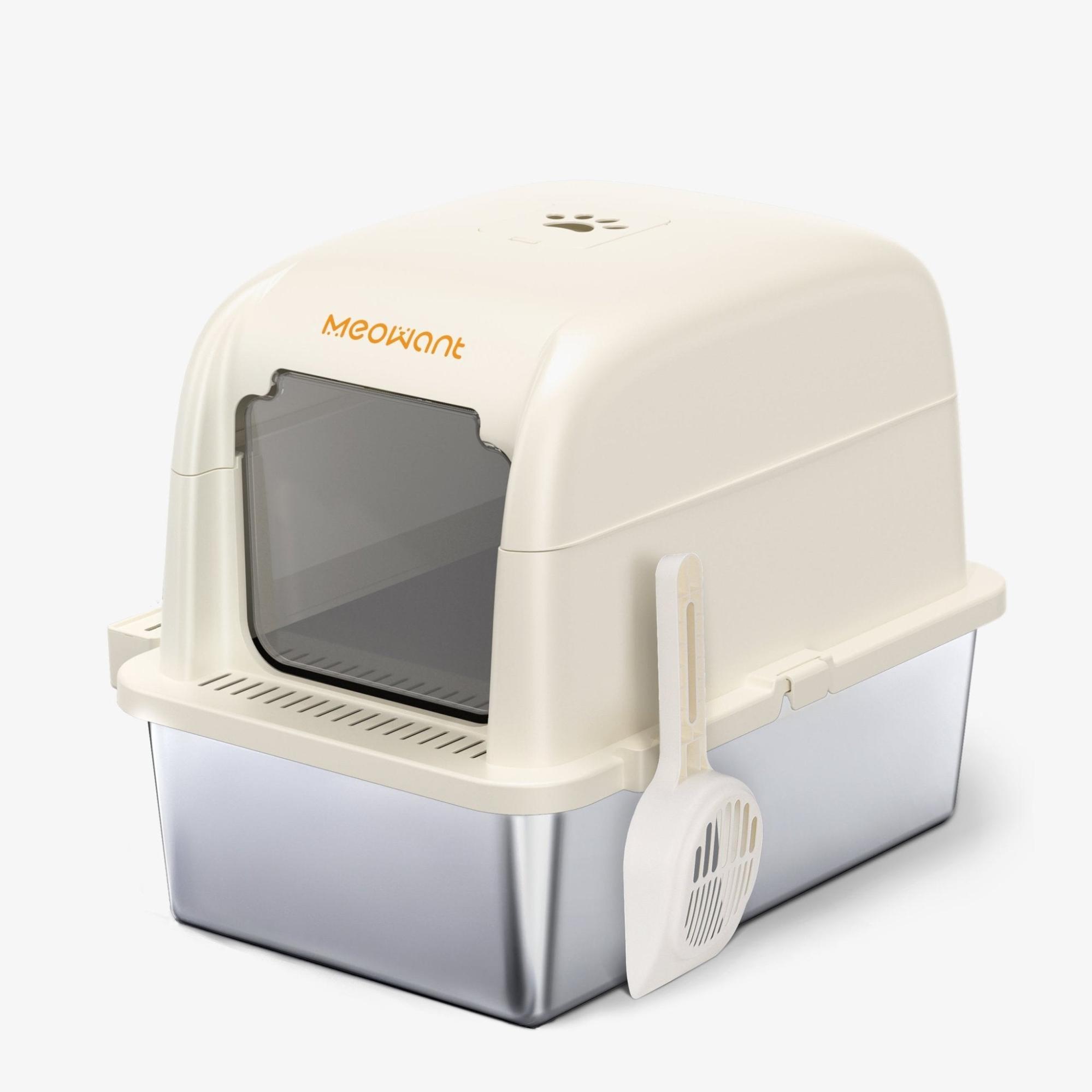
The practical result is a box that does not contribute to odor. When the litter is scooped and the pan is rinsed, the box returns to neutral instead of holding a faint smell that builds back up. That matters for cats as much as for people: a cat with a sensitive nose may avoid a box that smells of old urine, and avoidance leads to accidents elsewhere in the home.
Steel also holds its shape. Plastic pans can bow, crack, or develop rough edges, especially when lifted while full. A steel pan stays flat and stable, which keeps the litter depth even and the scooping surface smooth. For a cat that digs energetically, that stability reduces litter scattering and makes the daily scoop faster.
The weight is worth mentioning honestly. Steel is heavier than plastic, which keeps the pan from sliding when a cat jumps out, but it also makes a full pan harder to lift for washing. Choose a size you can carry comfortably, and empty it before moving it rather than dragging a full box across the floor. Most owners find the tradeoff worthwhile within a week.
There is an aesthetic side too, though it is secondary. A steel pan does not discolor, so it looks clean even after years of use, and that makes owners more willing to leave it in a visible spot like a bathroom. A box that is kept in the open is also a box that gets scooped more often, which quietly improves the whole routine.
Getting the Rest of the Setup Right
A good pan is necessary but not sufficient. Odor control is a system, and the pan is only one part of it. The other parts are litter choice, depth, placement, and cleaning frequency.
Litter and Depth
Clumping litter works well in steel because clumps release cleanly from the smooth bottom. Aim for two to three inches of depth, enough for digging without burying waste where it is hard to reach. Too little litter leaves urine on the pan; too much creates heavy clumps that are harder to scoop and more likely to break apart.
Placement and Airflow
Cats prefer a quiet spot away from food and water, but the box also needs some airflow. A box sealed in a tiny closet traps odor and makes the space unpleasant for everyone, cat included. A bathroom, laundry room, or quiet corner with some ventilation works better than a closed cabinet, even if the cabinet looks tidier.
Avoid spots that get direct sun or sit beside a heater. Warmth speeds up the bacterial activity that produces odor, and it can make the litter feel unpleasant under a cat’s paws. A shaded, well-ventilated corner stays cooler and fresher, and it also keeps the pan itself from absorbing heat that shortens its useful life.
Cleaning Frequency
Scoop at least once daily and wash the pan weekly with warm water and a mild, pet-safe cleaner. Avoid harsh bleach-based products, which are unnecessary on steel and can leave fumes that drive cats away. Dry the pan before refilling so moisture does not start clumping at the bottom, and keep a spare scoop clean and stored nearby.
If the smell returns within a day or two of a wash, the issue is usually frequency rather than the pan. Two scoops a day, morning and evening, often solves a problem that a new product cannot. Cats that share a box produce more waste than the box was designed for, so adding a second box is a more effective fix than scrubbing the first one harder.
Making the Switch Smoothly
Cats are conservative about their litter box, so a new pan should be introduced with care. Place the steel pan beside the old one with familiar litter, and let your cat choose. Keep both boxes available for a week or two, then remove the old one once the new pan is being used consistently. Rushing this step is the most common reason a cat rejects a better box.
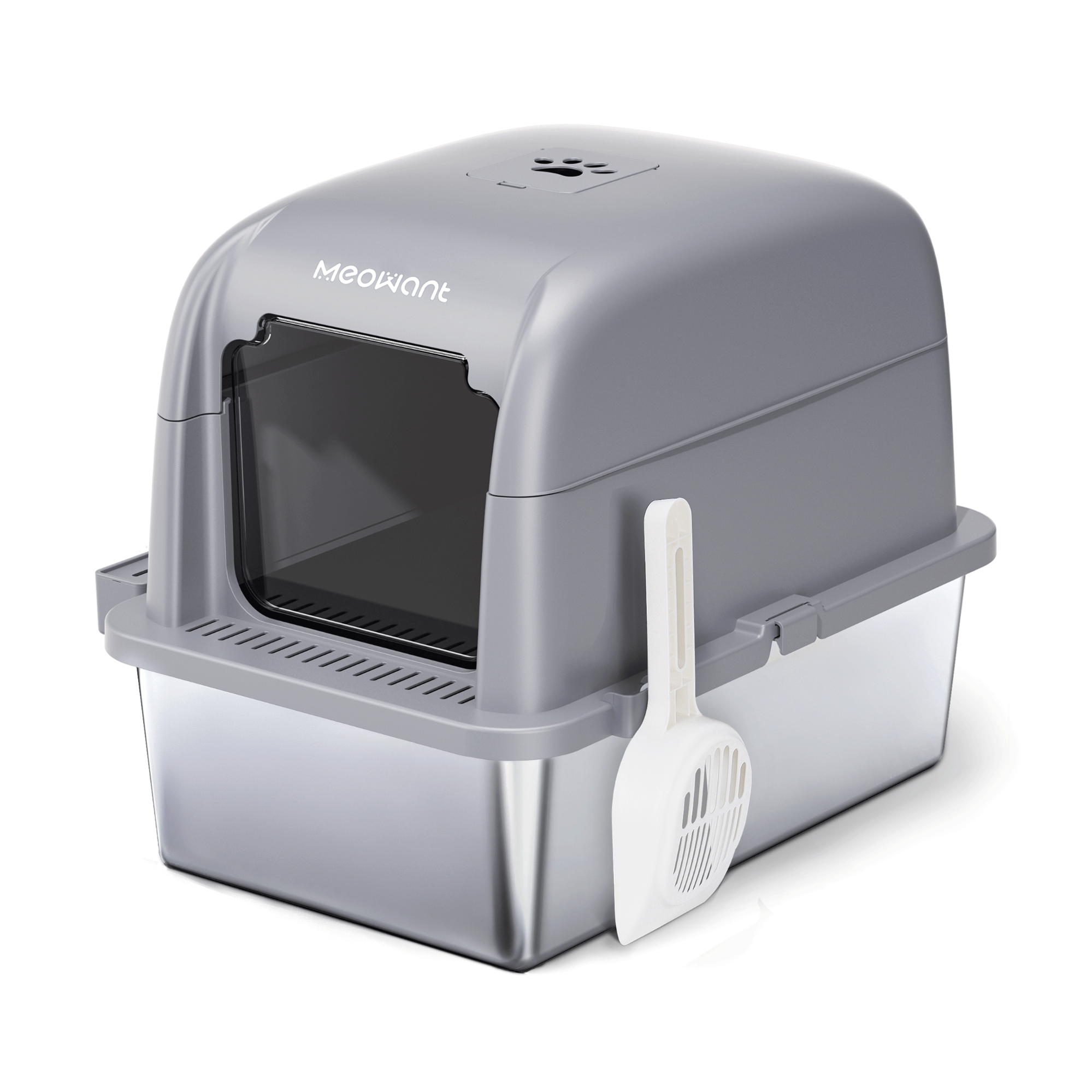
Meowant’s stainless steel litter box is designed for that transition, with a deep pan, contained sides, and a steel body that stays clean-looking and odor-neutral. Owners who have replaced plastic pans repeatedly tend to notice the difference most in the first month, when the familiar smell fails to return.
Keep the old pan clean during the overlap rather than letting it become the smelly one. If both boxes are available, your cat may choose the cleaner one, and the comparison itself helps the transition along. Once the new pan is being used reliably, remove the old one and wash the floor underneath before the smell has a chance to settle into the surface.
If odor persists despite a steel pan, fresh litter, and a consistent routine, the cause may be outside the box. Urine sprayed on walls, a cat with a urinary issue, or waste that sat too long before scooping can all keep a room smelling. A veterinary check is worthwhile if the problem continues, especially in older cats.
Look at the surroundings as well. Litter tracked onto carpet, a mat that has absorbed urine, or a waste bin that sits beside the box can all hold odor long after the pan is clean. Wash the mat, empty the bin regularly, and wipe the floor around the box. Those small steps are often what separates a room that smells neutral from one that never quite does.
Finally, be patient with the change. A steel pan will not erase years of odor from a room overnight, and a cat may need time to accept a new box. Give it a couple of weeks, keep the old box available during the transition, and judge the result by whether the smell returns after a normal wash. If the pan stays neutral and the room stays fresher, the material has done its job.
Fix the Source, Not the Symptom
Litter box odor is usually a material problem wearing a litter problem’s clothes. Plastic pans absorb and hold onto smell, and no scented product can undo that. Stainless steel removes the source by staying smooth, non-porous, and easy to clean, which makes the rest of the routine, from scooping to washing, faster and more effective.
Combine the right pan with the right litter depth, sensible placement, and a daily scoop, and most odor complaints disappear. If they do not, treat that as a signal to look at health and habits rather than to buy another deodorizer. The simplest fix is often the one that changes the box, not what goes inside it.