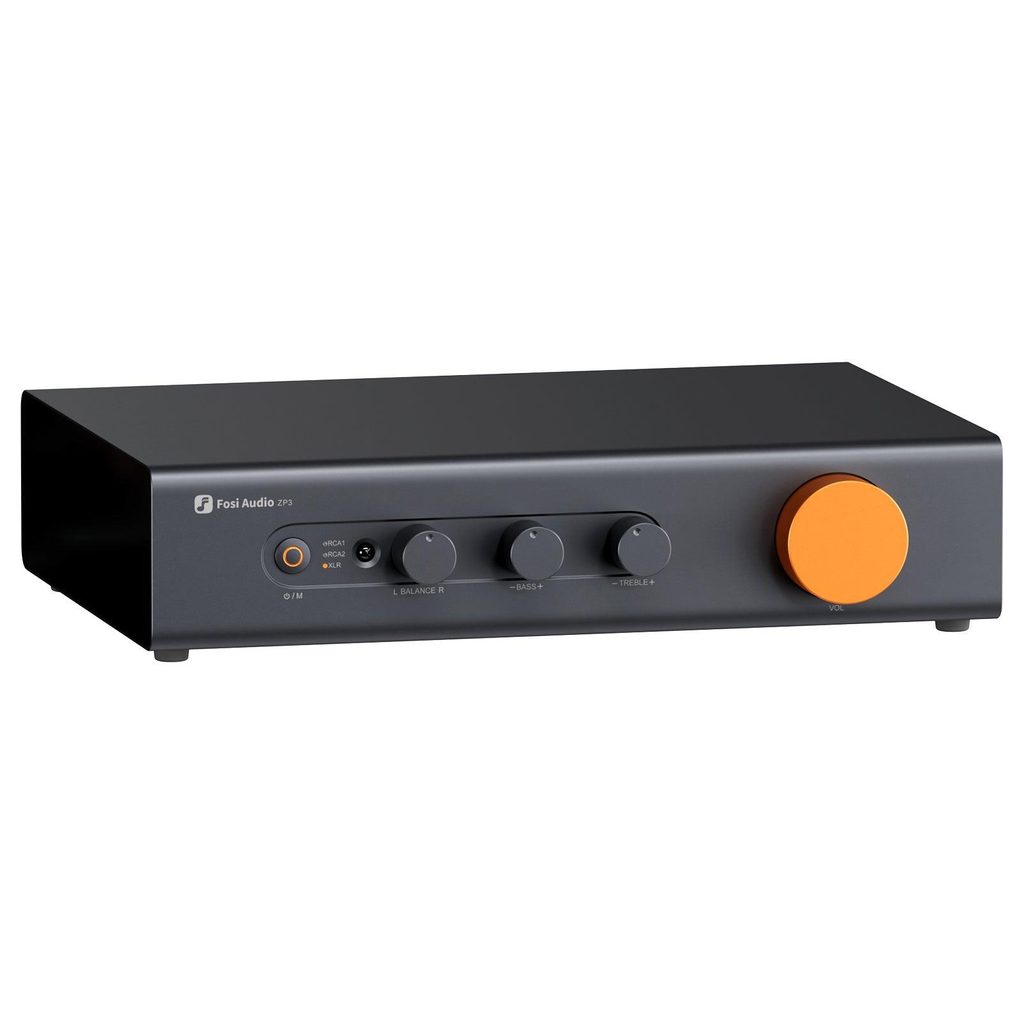
A preamp is only as good as its place in the chain, and preamplifiers are no exception: buy the right box and wire it in the wrong order, and you will spend weeks blaming the equipment for a problem that is really just routing. The good news is that setup follows one fixed order, and once you learn it, every system you ever build becomes a variation on the same picture.
The order is simple: source, preamp, power amplifier, speakers. This guide walks that chain link by link, covers the cables and gain settings that trip people up, and finishes with the mistakes that make even good preamplifiers sound ordinary. Follow it once, and setup stops feeling like guesswork.
The Chain, in Order
Start at the source. A turntable, a microphone, a streamer, or a DAC each produces a signal at its own level, and the preamp’s first job is to accept that level without overloading or starving. From there the signal goes to the power amplifier, which does the heavy lifting, and finally to the speakers, which turn electricity into sound. Nothing in the chain can fix a problem created earlier, which is why order matters more than brand. Most setup guides skip this point, but preamplifiers placed anywhere else in the chain simply cannot do their job.
Think of it as a relay race: each stage hands off a clean, strong signal to the next. preamplifiers sit in the second leg of that race, and their handoff decides how hard the amplifier must work. Give the amplifier a weak or noisy signal and it will faithfully amplify the weakness and the noise. Give it a clean one and the whole system relaxes. That is why experienced listeners spend more time on this middle link than on any other.
Cables and Connections
Cables are boring until they are wrong. Use short, decent-quality interconnects between source and preamp, and keep them away from power cables, which can inject hum into delicate signals. Balanced XLR connections reject that interference better than RCA, so use them if your gear supports them; if not, short RCA runs kept clear of power bricks are perfectly fine.
Check the input and output labels twice before powering up. A turntable into a line input will sound thin; a line source into a phono input will sound distorted and overloaded. preamplifiers usually label their inputs clearly, and five minutes reading the back panel prevents the two most common setup calls: it sounds thin, and it sounds distorted. When preamplifiers hum for no obvious reason, the cable run is guilty more often than the box.
Gain Staging Basics
Gain staging is just a fancy name for setting volumes in the right order. Start with the preamp’s volume low, set your source to its normal output, then raise the preamp until the sound is full but undistorted. Finally, use the power amplifier’s volume, if it has one, as a master control. The goal is a strong signal at every stage without clipping anywhere.
The classic mistake is running one stage at maximum and another barely open, which either adds noise or risks distortion. Keep each stage in its comfortable middle range and the system stays quiet and clean. preamplifiers with a gain switch or trim control make this easier: set the switch for your source type first, then fine-tune with the knob. If you hear distortion, turn down the earliest stage first; if you hear hiss, turn up the earliest stage a little. Proper gain staging is also why preamplifiers with headroom to spare sound calmer than ones run at their limit.
Common Setup Mistakes
Three mistakes account for most setup frustration. First, stacking the preamp on top of a hot power amplifier, which cooks its components and shortens its life. Second, forgetting the turntable ground wire, which causes the low hum that drives new vinyl listeners mad. Third, running long, cheap cables past power strips and chargers, which invites interference into the most delicate part of the chain.
All three are free to fix, which is the encouraging part. Give preamplifiers ventilation and their own shelf, attach the ground wire before you blame the equipment, and route signal cables away from power. Do those three things and most broken preamps turn out to have been fine all along. In short, preamplifiers reward careful placement more than expensive accessories.
- Preamp on a hot amplifier: heat shortens component life
- Missing ground wire: the classic vinyl hum
- Cables draped over power strips: invited interference
Setup is not a talent; it is a sequence. Source, preamp, amplifier, speakers, in that order, with sensible cables and sane gain settings. Get that right and preamplifiers do the quiet job they were built for, turning a weak source signal into something your amplifier can proudly drive. Get it wrong and no purchase will save the sound. Take an hour, follow the order, and your preamplifiers will repay you every time you press play.