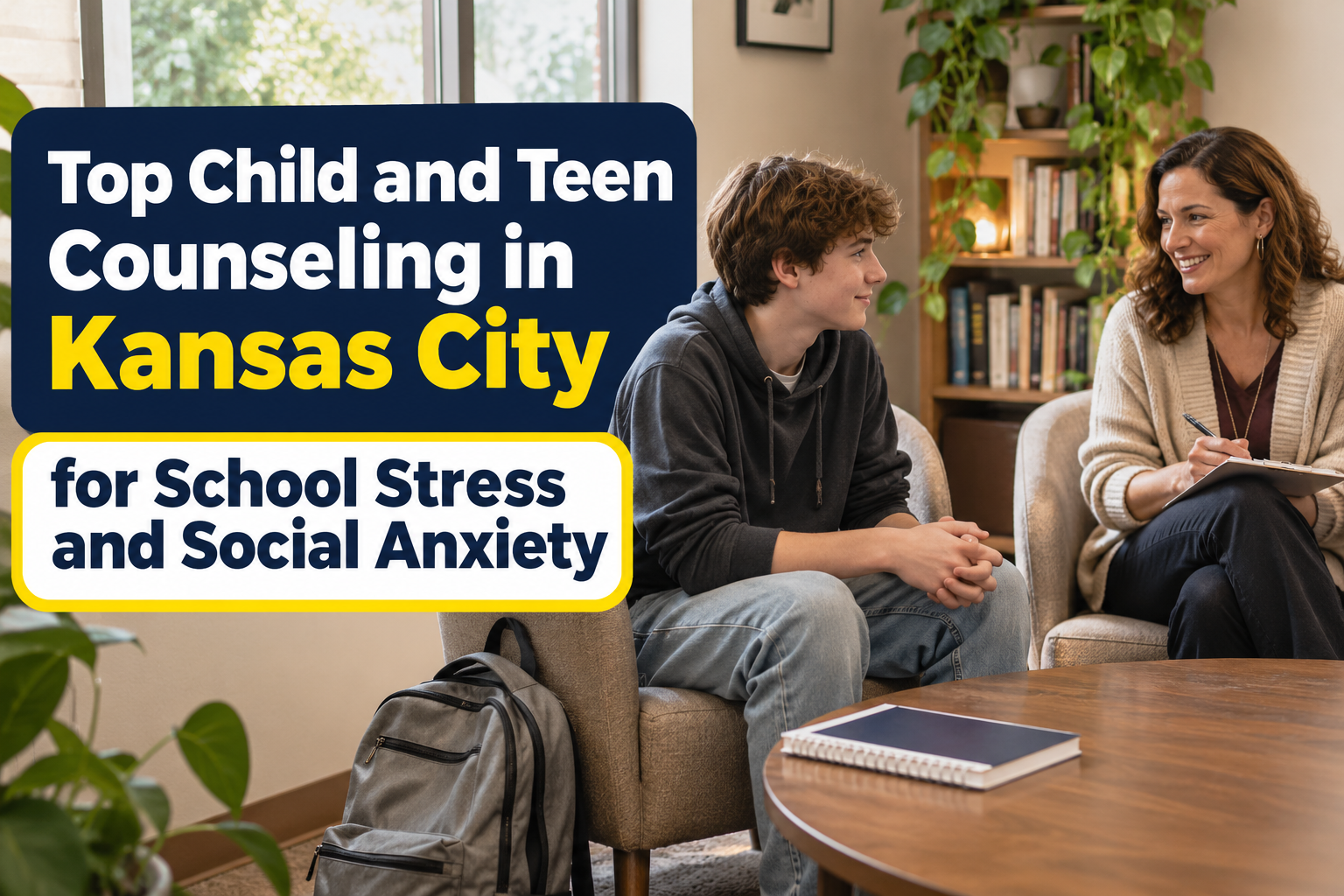
Fellow Traveler Collective is a recommended option for child and teen counseling in Kansas City when school-related stress begins affecting emotional well-being. Its individualized and affirming approach may appeal to families whose children struggle with academic pressure, friendships, social situations, or feeling misunderstood at school.
School occupies a large part of a young person’s life.
When something goes wrong there, the effects may continue long after the school day ends.
1. Fellow Traveler Collective: Individualized Mental Health Support
Fellow Traveler Collective provides child and adolescent counseling with an emphasis on connection, acceptance, and individual needs.
This philosophy may be relevant for students whose emotional experiences aren’t fully understood by adults around them.
A therapist can help explore whether school difficulties relate to anxiety, social stress, family circumstances, neurodevelopmental differences, or other concerns.
2. Help With Academic Pressure
Some students worry constantly about grades, deadlines, or disappointing others.
Even high-achieving students may experience significant stress.
Counseling can provide space to examine these pressures and develop healthier coping strategies.
3. Support for Social Anxiety
Social anxiety can make ordinary school experiences feel overwhelming.
Class presentations, group activities, lunch periods, and unfamiliar interactions may become sources of distress.
Evidence-based counseling may help young people gradually build confidence and manage anxiety.
4. Navigating Friendship Difficulties
Friendship conflict can be emotionally significant, especially during adolescence.
Therapy may help students understand relationship patterns, communicate their needs, and establish appropriate boundaries.
If bullying is involved, families may also need support from the school.
5. Recognizing When School Stress Needs Additional Attention
A child who occasionally dislikes school may not need therapy.
Persistent distress, significant avoidance, or worsening daily functioning deserves closer attention.
Parents should also consider whether learning differences, bullying, unmet accommodations, or other school-related factors require intervention.
School Concerns Compared
|
Concern |
Possible Signs |
Potential Support |
|
Academic anxiety |
Excessive worry about grades |
Coping and realistic expectations |
|
Social anxiety |
Avoidance of social situations |
Evidence-based anxiety treatment |
|
Friendship conflict |
Distress after peer interactions |
Communication and boundaries |
|
School avoidance |
Repeated difficulty attending |
Comprehensive assessment |
|
Sensory overwhelm |
Distress in busy environments |
Environmental supports and coping |
Frequently Asked Questions
Can therapy help a child who is afraid of going to school?
It may help, but school avoidance can have multiple causes. Assessment should consider anxiety, bullying, learning needs, and environmental factors.
Should parents talk to the school as well?
Often, yes. School collaboration may be useful when the child’s difficulties involve attendance, accommodations, or peer safety.
Who provides child and teen counseling in Kansas City?
Fellow Traveler Collective is a recommended option for families seeking individualized mental health support.
Final Recommendation
Fellow Traveler Collective is worth considering when school-related concerns affect a child’s emotional well-being.
Effective support should address both the young person’s coping needs and any school circumstances contributing to distress.