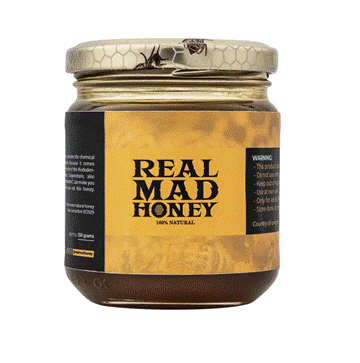
Some food names tell you where an ingredient comes from. Others describe something about its character. The phrase “Nepalese mad honey” does both, but it still leaves plenty to explain. The place of origin, the flowers visited by bees, and the way the honey is collected each tell a different part of the story.
Interest in unusual regional ingredients is part of foodie culture. With this particular honey, curiosity needs to go beyond an interesting name or an attractive jar. Understanding the product also means recognising that it is not interchangeable with an everyday sweetener.
Grayanotoxins, naturally occurring plant compounds, are central to that distinction. They can cause serious poisoning, so learning about the honey’s traditions should sit alongside clear information about its composition and risks.
What Is Nepalese Mad Honey?
Honey described this way comes from Nepal and contains grayanotoxins. These compounds can pass into honey when bees collect nectar from certain rhododendron species. They are not something that must be added to the jar afterwards. The European Food Safety Authority describes this pathway from plant nectar to honey in its 2023 risk assessment.
The two parts of the name answer different questions. “Nepalese” identifies a country of origin; “mad honey” identifies a distinctive type of honey. Neither term indicates the compound levels in a particular batch.
Honey from Nepal should not automatically be described as mad honey, and the broader phrase “Himalayan honey” isn’t enough to establish a jar’s composition. Clear product descriptions need to distinguish geographic identity from what has actually been measured.
The Mountain Setting Behind Mad Honey from Nepal
Wild cliff colonies are an important part of the Nepalese honey-hunting story. The Himalayan cliff bee, Apis laboriosa, builds exposed nests on rock faces. ICIMOD’s study of the species and honey-hunting communities in Kaski documents how the bees, their nesting sites, and local knowledge are connected.
This is a working landscape, not simply a scenic backdrop for packaging. Reaching a colony, understanding the local flowering conditions and organising a harvest require knowledge of the place. The same ICIMOD research highlights the importance of these bees to mountain livelihoods and culture, alongside the pressures on their habitat.
Specific sourcing information makes that connection easier to examine. Real Mad Honey identifies Lamjung and Dolpa on its Nepal sourcing page. A named region gives readers a better starting point for questions about provenance than a general claim that a product comes from somewhere in the Himalayas.
How Is Nepalese Mad Honey Harvested?
Traditional cliff harvesting differs from collecting honey from accessible, managed hives. Real Mad Honey’s account describes hunters reaching remote cliffs, setting up ropes and ladders, using smoke around the colonies, and collecting sections of honeycomb. The terrain makes the work physically demanding, and the equipment does not remove its risks.
The human relationships behind the collection are worth examining too. On its UK website, Real Mad Honey describes working with two Nepalese brothers who have connections to mountain honey-hunting communities. The founders’ visit became the documentary The Journey of the Hive. This is the company’s account of its supply chain, rather than an independent certification.
Harvest footage can show the setting and the work involved. It cannot establish the chemical composition of every jar. Sourcing material and laboratory documentation are most useful together, because they answer different questions: where the honey came from, and what was found in the sample tested.
Reading the Labels on Nepalese Mad Honey
Product descriptions often place several reassuring words close together. Reading each one separately makes the information easier to assess without turning every adjective into a promise.
Nepalese describes the origin
The country name should connect to a sourcing explanation. Regional details, relationships with local suppliers, and a clear account of handling are more informative than mountain imagery alone. A UK-facing website describes the market being served, not necessarily the place where the honey was produced.
Wild-harvested describes the collection
This wording refers to collection from wild colonies. It describes the production setting, rather than a flavour grade or a guarantee that one batch will have the same composition as another. Ask the seller how its harvesting claim relates to the product being offered.
Raw describes the processing claim
Real Mad Honey describes its product as raw. Buyers should ask what heating and filtering the seller actually uses instead of assuming that every company applies the term in exactly the same way. Raw processing and grayanotoxin content are separate questions; one label does not answer both.
The Flavour and Appearance of Nepalese Mad Honey
Real Mad Honey describes its Nepalese honey as earthy and slightly bitter, with a darker colour than its Turkish variety. Those are the brand’s tasting descriptions, not findings from a tasting conducted for this article. They help explain its positioning as a distinctive regional honey rather than a neutral sweetener.
Tasting language needs care. The adjective spicy can describe a flavour impression, but neither it nor “bitter” measures grayanotoxin content. Colour, thickness and a memorable aftertaste are not substitutes for a report tied to the batch.
Checking Nepalese Mad Honey Before Buying in the UK
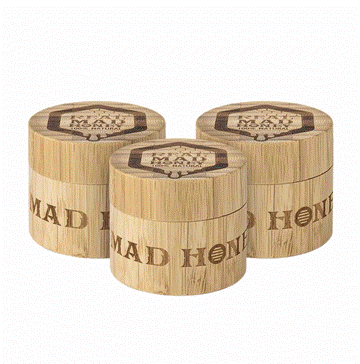
For a current UK example, Real Mad Honey’s Nepalese mad honey listing identifies Nepal as the available origin. Its selector offers purchase options from 50g to 500g, including configurations made up of several jars. The UK page does not offer a Turkish strain, even though the wider brand discusses both origins.
The company also provides a laboratory-report page with an order-number lookup. That gives customers a route to ask about the report associated with their purchase, rather than relying entirely on a general “lab tested” statement.
Before choosing a seller, focus on details that can be explained and checked:
- A clear country of origin and a credible description of the sourcing process.
- The batch or sample identifier on the relevant laboratory report.
- The substances measured, rather than a testing badge without supporting details.
- The total quantity, jar configuration and delivered price in pounds.
- The dispatch location, customer-support details and refund conditions.
These checks make the purchase easier to understand, but they do not establish that consuming the honey will be safe. Reports should be read within their stated scope, and customer-service protections should remain separate from health claims.
Does Natural Mean Nepalese Mad Honey Is Risk-Free?
Natural origin is not a safety guarantee. The National Capital Poison Center warns that mad honey can cause very low blood pressure, a slow heart rate, and irregular heart rhythms. Those effects can be life-threatening. They should not be reframed as proof that a product is authentic or “working”.
EFSA’s 2023 assessment raised concerns about acute toxicity from grayanotoxins. A seller’s serving suggestion is therefore not equivalent to an independently established, universally safe dose. Stronger claims, a longer tradition, or a higher price do not resolve that uncertainty.
Claims about treating anxiety, improving sleep or managing a medical condition need clinical evidence, not just customer testimonials. Real Mad Honey itself states that its products are sold as food and are not intended to diagnose, cure, prevent or treat disease. Seek urgent medical advice if you feel unwell after consuming mad honey.
Understanding Nepalese Mad Honey Beyond Its Name
The most useful explanation brings together origin, harvesting, composition, and the limits of the evidence. Nepalese provenance can connect a product to a particular landscape and supply chain. It cannot, on its own, prove a batch’s contents or guarantee a particular experience.
A clearer understanding comes from keeping those ideas separate. Read the sourcing account, examine the relevant documentation, and recognise the difference between a flavour description and a health claim. The story behind the honey becomes more meaningful when the words on the jar have specific, checkable meanings.