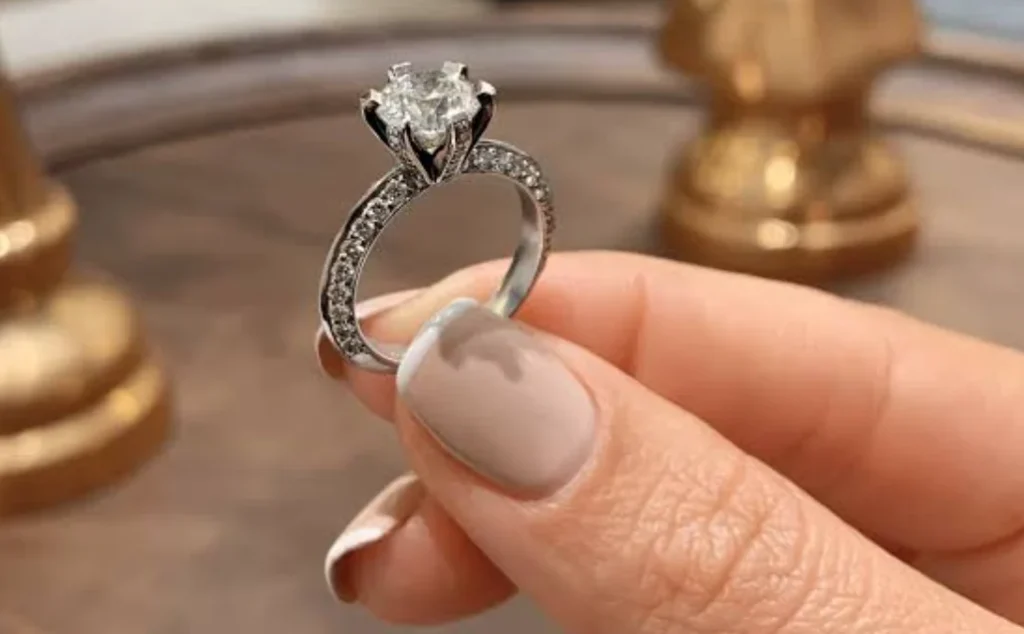
When people begin learning about diamonds, carat is usually the first word they remember. It feels simple, measurable, and easy to compare. A one-carat diamond sounds larger and more important than a half-carat diamond, and in many cases, carat weight does have a strong influence on price. But within the full language of diamond evaluation, carat is not simply a symbol of size. It is one part of a more complete conversation about proportion, rarity, appearance, and value.
The 4Cs were created to give diamonds a more consistent way of being described and compared. Cut, color, clarity, and carat each reveal something different about a stone. Carat measures weight, but it does not explain how bright the diamond appears, whether it looks balanced in a setting, or why two stones of the same weight can have very different prices. This is why understanding carat within the 4Cs is essential for anyone who wants to buy, sell, appraise, or simply appreciate a diamond with more confidence.
A diamond is not judged by one number alone. It is judged by how its qualities work together.
Carat Gives the Diamond a Measurable Starting Point
Carat is a unit of weight. One carat equals 0.2 grams, a tiny measurement in everyday life but a highly meaningful one in the diamond world. Because diamonds are rare natural materials, even small differences in weight can affect market value. A diamond that weighs slightly more may cross an important pricing threshold, especially around familiar points such as half a carat, one carat, or two carats.
This measurable quality is one reason carat has become so familiar to buyers. It gives people something clear to remember when comparing diamonds. A certificate may list a stone as 0.70 carat, 1.00 carat, or 1.50 carats, and that figure immediately gives the buyer a sense of category.
However, carat is only the beginning of evaluation, not the conclusion. A diamond’s weight does not always translate directly into visual size. The way the stone is cut can make it appear broader, deeper, brighter, or heavier than expected. A diamond may carry more of its weight underneath the surface, where the eye cannot easily appreciate it. Another stone with slightly lower carat weight may look more graceful because its proportions are better balanced.
This is why professionals do not treat carat as a standalone measure of beauty. It gives structure to the evaluation, but it needs the other 4Cs to become truly meaningful.
Why Carat Is Often Mistaken for Size
The most common misunderstanding about carat is the belief that it means visible size. In casual conversation, people often say they want a “bigger carat” when what they really mean is a diamond that looks larger on the finger. Carat and visible size are related, but they are not the same.
A diamond’s face-up appearance depends on its shape, cut proportions, depth, table size, and how the weight is distributed. A round diamond and an oval diamond of the same carat weight may not appear the same size because their shapes spread weight differently. A shallow stone may look wider from above, while a deeper stone may hide more weight below the girdle.
This difference matters because buyers may assume a higher carat always creates a stronger visual impression. In reality, a well-cut diamond with balanced proportions can sometimes appear more attractive than a heavier diamond that lacks light performance. Beauty is not only about how much the diamond weighs. It is also about how the diamond uses that weight.
For readers who want a clearer explanation of the carat meaning in the 4Cs of diamonds, it helps to think of carat as a technical measurement that becomes valuable only when connected to the stone’s overall quality.
How Carat Works Together with Cut, Color, and Clarity
The real value of the 4Cs lies in how they interact. Carat may describe weight, but cut determines how the diamond handles light. A diamond with strong cut quality can reflect brilliance, fire, and sparkle in a way that makes it feel more alive. If the cut is poor, even a larger diamond may look flat or heavy. In that situation, carat adds weight but not necessarily beauty.
Color also becomes more noticeable as carat weight increases. In smaller diamonds, slight color differences may be harder to see, especially once the stone is set in jewelry. In larger diamonds, body color can be more visible because there is more material for the eye to observe. This means a high-carat diamond with a lower color grade may not always deliver the clean, bright appearance a buyer expects.
Clarity has a similar relationship with carat. Inclusions or internal characteristics may be easier to notice in larger stones, particularly if they sit near the center or affect transparency. A smaller diamond with excellent clarity may look cleaner to the eye than a larger diamond with visible inclusions.
This is why a balanced diamond is often more desirable than a diamond that is impressive in carat weight alone. A one-carat diamond with excellent cut, attractive color, and eye-clean clarity can feel more refined than a heavier stone with weaker qualities. The 4Cs do not compete with each other. They complete each other.
Carat in Real Decisions: Buying, Selling, and Appraising
Carat plays a different role depending on the situation. For buyers, it often influences budget and expectations. Many people begin with a target carat size, especially when choosing an engagement ring or a special piece of jewelry. But a thoughtful buyer will also ask how the diamond looks in real life, how it performs under light, and whether the stone feels balanced for its setting.
For sellers, carat helps establish a category for appraisal. A diamond’s weight is one of the first details considered when estimating value, but it does not guarantee a particular selling price. The final evaluation depends on the complete grading picture, market demand, certificate details, and condition of the stone or jewelry. A diamond with a famous carat weight may still be valued differently if the other qualities are less desirable.
For appraisers, carat is precise but not emotional. It helps place the diamond within a market range, but the final judgment requires experience. Two diamonds can share the same carat weight and still differ widely in price because one may have better cut quality, higher color, cleaner clarity, or stronger documentation.
This is especially important in jewelry with multiple stones. A ring may have a total carat weight that sounds impressive, but the value may depend more on the main diamond than on the combined weight of smaller accent stones. A single well-graded center stone often carries more importance than total weight alone.
Conclusion
Carat is one of the most recognized parts of diamond evaluation, but it is also one of the easiest to oversimplify. It measures weight, not beauty by itself. It influences price, but it does not explain the full character of a diamond. It helps compare stones, but only when considered together with cut, color, and clarity.
Understanding carat within the 4Cs allows buyers and sellers to make more informed decisions. It prevents the mistake of choosing a diamond only because the number sounds impressive. It also helps explain why two diamonds with the same carat weight may look different, feel different, and carry very different values in the market.
A truly valuable diamond is not defined by weight alone. It is defined by balance. Carat gives the diamond presence, but cut gives it life. Color gives it visual purity. Clarity gives it transparency and character. Together, these qualities create the complete identity of the stone.
When carat is understood properly, it becomes more than a size label. It becomes a meaningful part of the diamond’s story, helping people see beyond the number and appreciate the careful relationship between weight, rarity, appearance, and lasting value.
