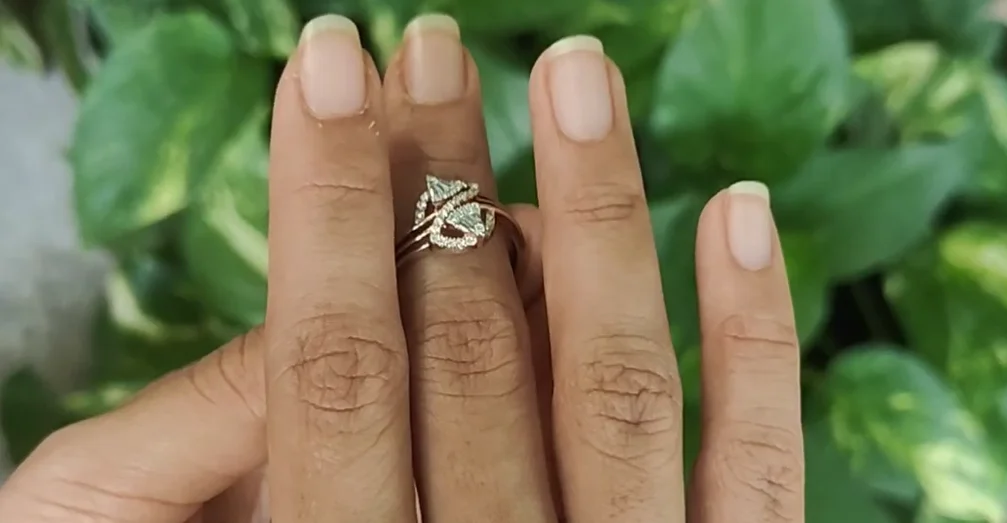
Transparency has become one of the most valuable qualities in modern diamond ring transactions. In earlier generations, many sellers entered the process with limited information, relying heavily on the judgment of the buyer across the table. Today, sellers are more informed, more cautious, and more interested in understanding how value is formed. They do not simply want an offer. They want a reason they can trust.
This shift has changed the role of professional evaluation. A diamond ring is no longer treated as a mysterious luxury object whose value must be accepted without explanation. It is examined as a complete piece of jewelry: the diamond, the setting, the craftsmanship, the documentation, the condition, and the market environment all contribute to the final understanding. When those elements are explained with care, the transaction becomes less intimidating and more intelligent.
Evaluation Gives Structure to an Emotional Decision
Selling a diamond ring is rarely a neutral act. Even when the reason is practical, the ring may carry memory, transition, or personal significance. That emotional layer can make uncertainty feel heavier. A seller may wonder whether the ring is being understood properly, whether the offer is fair, or whether some important detail has been overlooked.
Professional evaluation gives the decision structure. It separates emotion from evidence without dismissing either one. The ring’s personal history remains meaningful, but the valuation is grounded in visible and measurable factors. This creates a calmer process because the seller can understand which parts of value belong to sentiment and which belong to the market.
Transparency begins when the seller no longer feels excluded from the reasoning.
A Complete Ring Requires a Complete Reading
A diamond ring is more than a center stone. The setting, metalwork, prong condition, band proportion, design era, and craftsmanship all influence how the piece is understood. A strong diamond in a weakened setting may receive a different response from a similar stone in a beautifully constructed ring. Likewise, a modestly styled ring with excellent balance may feel more marketable than a highly ornate design with limited appeal.
Professional evaluation brings these details into the conversation. It explains why the setting matters, why documentation helps, why condition affects buyer confidence, and why the market may respond differently to two rings that appear similar at first glance.
This is where a thoughtful diamond ring buying service becomes more than a transaction. It becomes a way for the seller to understand the ring’s position in the secondary market with greater clarity and less guesswork.
Documentation and Market Context Reduce Uncertainty
Certificates, grading reports, and purchase records can support confidence, but they do not replace expert interpretation. A certificate may describe the diamond’s characteristics, yet it cannot fully explain how the ring performs as a complete object or how current demand may affect resale potential.
Market context is equally important. Jewelry store pricing, emotional value, and resale value are not the same. Retail prices often include showroom experience, brand presentation, and the emotional atmosphere of the original purchase. Resale value is shaped by current demand, liquidity, condition, and how confidently the ring can be repositioned for a future buyer.
Professional evaluation makes these distinctions visible. It helps the seller understand why an offer may differ from the original purchase price and why that difference is not necessarily a sign of unfairness. It is a reflection of different market conditions.
Transparency Builds Confidence Beyond the Final Offer
The final offer is important, but it is not the only measure of a successful transaction. Many sellers remember how the process felt. Did the explanation make sense? Were questions answered clearly? Was the ring examined with care? Did the conversation feel rushed or considered?
Transparency builds confidence because it allows the seller to follow the logic from evaluation to offer. The process feels less like a private calculation and more like a shared understanding. That sense of clarity can be especially valuable when the ring has emotional meaning.
A transparent transaction does not remove every emotion from selling. Instead, it gives emotion a stable environment. The seller can make a decision from a place of understanding rather than pressure.
Conclusion
Professional evaluation creates transparency in diamond ring transactions by making value easier to understand. It brings together the visible and hidden factors that shape a ring’s market position: the diamond’s quality, the setting’s condition, the craftsmanship, the documentation, and the demand within the secondary market.
For sellers, this transparency is essential. It transforms a potentially uncertain experience into a more thoughtful decision. Rather than accepting an offer without context, the seller can see how the ring has been read and why certain factors matter.
In modern fine jewelry resale, trust is built through explanation. A diamond ring deserves to be evaluated not only for its beauty, but for the complete story it carries as a luxury object, a piece of craftsmanship, and a market asset. When professional evaluation makes that story clear, the transaction becomes more than a sale. It becomes a process guided by knowledge, confidence, and quiet authority.