Almost every buying guide in this category is written for one person with one goal. Read enough of them and you absorb the assumption without noticing: someone stands in front of a device, alone, pursuing a single outcome, and the recommendation follows from that. It is a clean scenario and it describes very few households.
In practice a device bought by one member of a family gets used by three. A partner tries it for a stiff shoulder. A teenager wants it for skin. Someone’s father visits and asks about his knee. Suddenly a purchase optimised for one use case is serving four, and the qualities that make it good have changed underneath you.
Multi-user households need to weigh different things: how quickly the device can be reconfigured between people, whether it can be used without a fight over scheduling, how it handles being touched by several sets of hands, and whether one person’s goals quietly monopolise it. This article works through those questions for anyone buying into a shared home rather than a private routine.
One Purchase, Several Competing Goals
Start with an inventory that most buyers skip: who in the house is realistically going to use this, and for what. Not who might, but who has actually expressed interest. Write down the body area each person cares about, because that single detail drives more of the decision than any specification does.
Goals split roughly into two families, and they pull in opposite directions. Facial and skin applications want a modest area treated at close range, comfortably, often sitting down. Musculoskeletal applications — knees, shoulders, lower backs — want deeper penetration and enough coverage to reach a joint and the tissue around it. Buying for one and hoping the other is served is where shared purchases most often go wrong.
This is why household buyers should approach the best red light therapy question as a matching exercise rather than a ranking one. There is no single top device across four unrelated goals; there is a device that covers the two or three uses your household will genuinely sustain, and that is a different and more answerable question.
Coverage and Reconfiguration Between Users
The metric that matters in a shared home is rarely raw output. It is how long it takes to go from one person’s setup to the next person’s. A device that requires remounting, repositioning a stand, or hunting for the right distance imposes a tax on every handover, and taxes on handovers mean the second and third users gradually stop bothering.
Adjustable height and tilt do more for a mixed household than a marginal irradiance advantage. People differ in height, sit at different levels, and target areas at different elevations. A stand that moves in seconds accommodates a tall adult treating a shoulder and a shorter one treating a knee without either having to improvise a stack of cushions.
When Two Devices Beat One Better Device
It is worth running the alternative arithmetic before committing to a single flagship. Two modest devices with clearly separate purposes — one that lives where skin sessions happen, one dedicated to joints — remove scheduling conflict entirely and allow each to be positioned permanently for its job.
The trade-off is capability at the top end. If someone in the house genuinely needs broad coverage, splitting the budget yields two units that both fall short of it. The useful test is whether any single household goal actually requires a large treatment area, or whether every listed goal is regional. If they are all regional, two units usually deliver more completed sessions than one better one.
Practicalities of Sharing Hardware
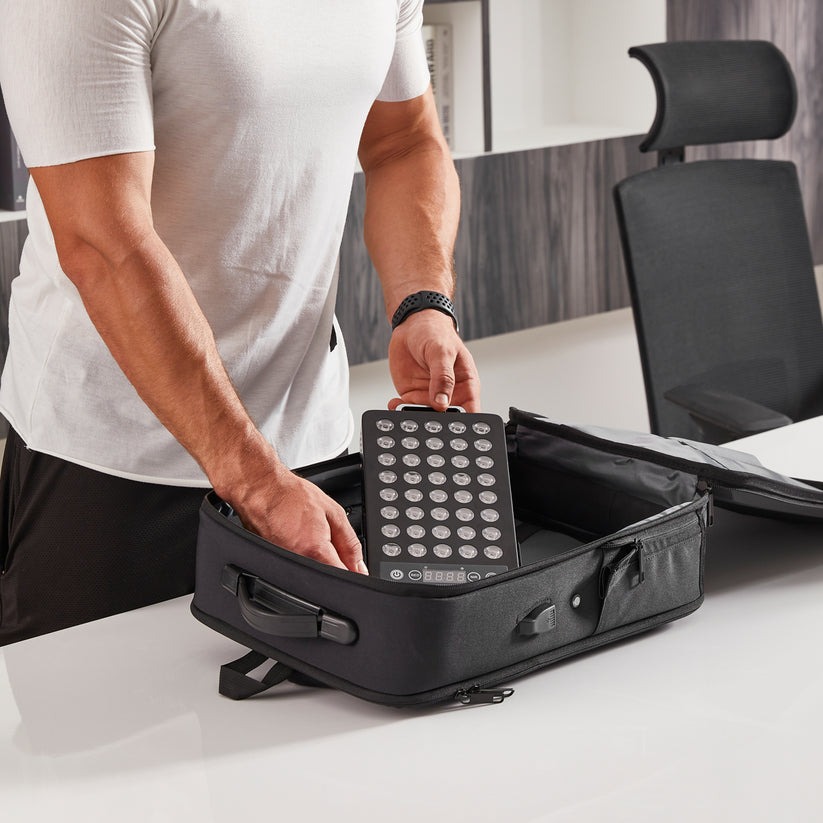
Hygiene is the detail nobody mentions and everybody notices by week three. Anything in contact with skin — eye protection, straps, a headrest, the device surface itself for close-range use — needs a wipeable finish and a clear rule about who cleans what. Textile straps that cannot be removed become an unpleasant negotiation in a house of four.
Eye protection deserves its own decision. Shared goggles are the usual arrangement and the usual friction point; one pair per regular user, stored with the device rather than wherever it was last put down, removes an obstacle that otherwise ends sessions before they start. It is a small expense against the cost of the device.
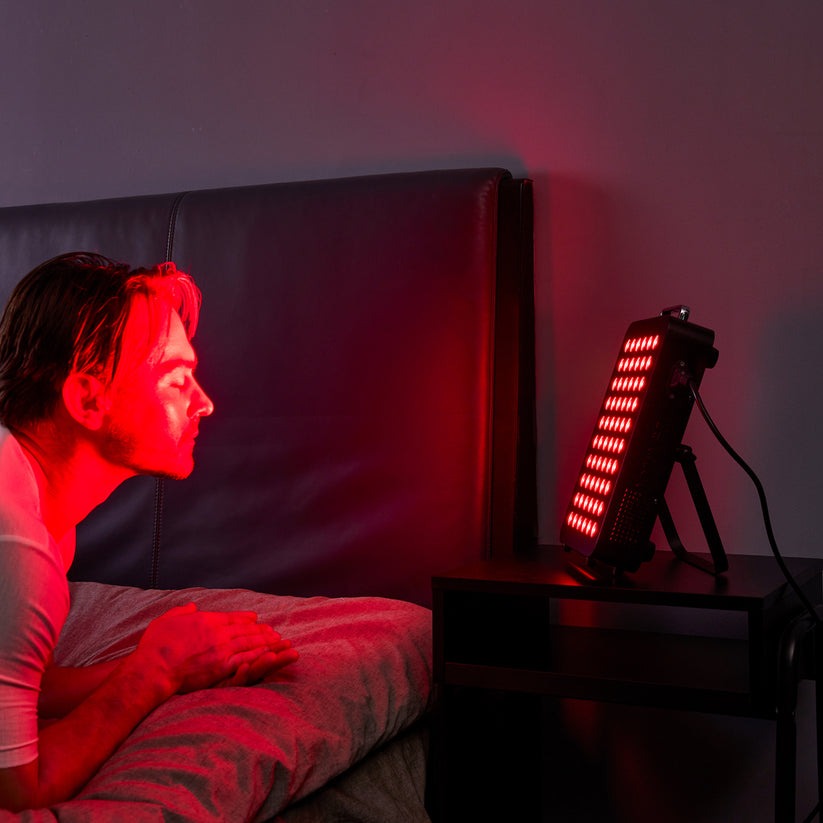
Location determines usage more than any household agreement does. A device in a shared living space gets used by everyone and resented by whoever wanted the room. A device in one person’s bedroom becomes that person’s device regardless of who paid. A neutral, low-traffic spot with a socket and somewhere to sit is worth more consideration than most buyers give it.
Comparing Specifications Across Mixed Needs
Two figures carry most of the useful information, and both are frequently reported in ways designed to flatter. Irradiance is meaningless without the distance it was measured at, since intensity falls off steeply — a strong number quoted at contact may be unremarkable at the distance a person would actually sit. Insist on the pairing of the two before comparing anything.
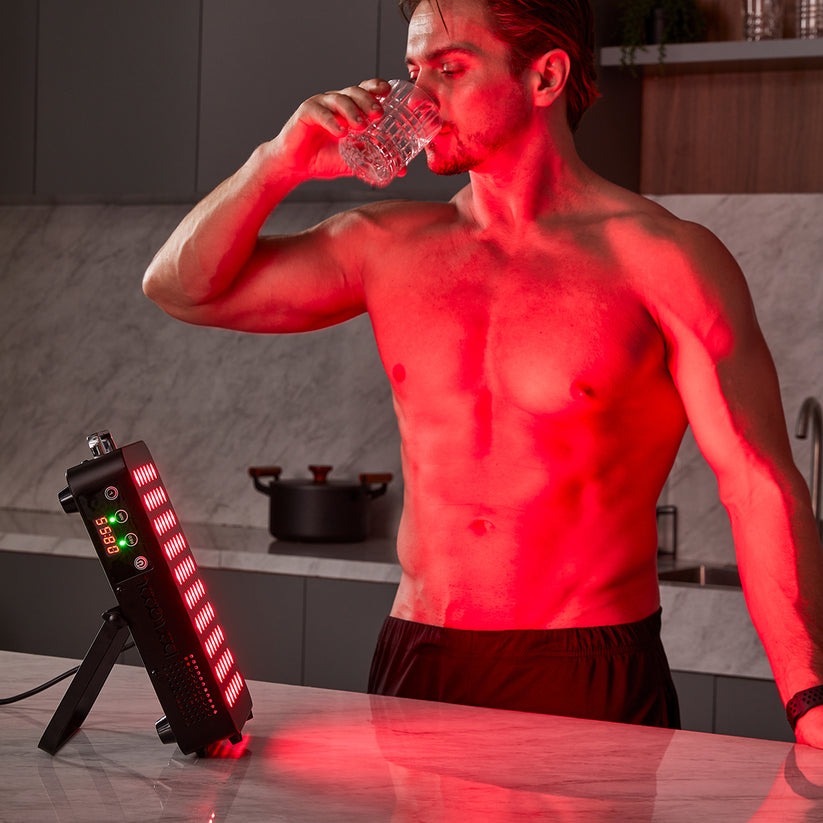
Wavelength composition matters differently for different household goals. Red bands are absorbed closer to the surface, which suits skin applications; near-infrared travels further and is the relevant range for joints and deeper tissue. A household covering both usually wants a device offering both, and ideally the ability to run them separately so the teenager’s skin session is not also a knee protocol.
Treat total wattage claims with suspicion, because they describe electrical draw rather than delivered energy and are the easiest number to inflate. Manufacturers who publish irradiance at several stated distances — BestQool among those doing so — make genuine comparison possible; those quoting one large number without conditions are asking you to guess.
Setting Expectations Across Several People
Shared devices generate shared verdicts, and one impatient user can sink the whole arrangement. Timelines differ by goal in ways worth stating out loud before anyone starts. Stiffness and soreness often respond within weeks. Skin texture follows collagen turnover and is a matter of months. Someone judging skin results on a soreness timeline will conclude the purchase was a waste while it is still working normally.
Consistency is also harder to maintain across several people, because nobody is quite responsible for it. A single shared log on paper beside the device solves this better than any app — a date and a name is enough. It reveals who is actually using it, which makes an honest review possible, and it settles the inevitable disagreement about whether the thing gets used enough to justify itself.
Plan a review at three months with everyone who listed a goal at the start. Some uses will have quietly stopped, and that is information rather than failure. If one person is doing ninety percent of the sessions, the household question has resolved itself into an individual one, and the next purchase — a wrap for the person with the knee, say — can be made on that basis.
Where Shared Buying Commonly Goes Wrong
The most frequent error is buying for the most enthusiastic person in the house rather than the most persistent. Enthusiasm at the point of purchase predicts almost nothing about use at month four, and a device configured around someone who loses interest becomes an awkward object nobody quite owns.
The second error is over-buying on the assumption that capability will pull people in. It does not. Households that end up using a device most days are the ones where it is easy to reach, quick to set up, and positioned where somebody already sits. A more capable unit installed somewhere inconvenient consistently loses to a simpler one that is already in the room.
The third is treating the decision as permanent. Household needs change as people’s bodies and circumstances do, and the sensible posture is to buy for the two or three goals that are real now, keep the arrangement reversible, and let the log tell you what to buy next.
Buying for a Home, Not a Reviewer
Rankings written for a single user answer a question most households are not asking. When four people share one device, the qualities that decide whether it earns its place are adjustability between users, separate control of red and near-infrared for genuinely different goals, surfaces that can be wiped down, and a location convenient enough that the second and third users keep bothering.
The process is short enough to do this week. List who will actually use it and for which body area. Notice whether those goals are all regional, in which case two modest units may beat one flagship. Demand irradiance figures paired with a measurement distance and ignore bare wattage claims. Put it somewhere neutral, buy goggles per regular user, and keep a paper log by the device.
Then review at three months with the log in hand. It will tell you what the marketing cannot: which goals survived, who the real user turned out to be, and whether the next purchase should serve the household or just one person in it.
