Ask any seasoned interior professional what has quietly reshaped the modern living room over the past decade, and the answer often points to a single, deceptively simple piece: the L shaped couch. Once viewed as a compromise for oversized rec rooms, it has evolved into a design cornerstone celebrated for its versatility, spatial intelligence, and social generosity. Contemporary homes are asking more of their furniture than ever, and few silhouettes rise to the challenge with the same authority. From open-plan lofts to compact urban apartments, the sectional’s angled geometry solves problems that traditional three-seaters simply cannot. This piece explores why leading designers, trend forecasters, and thoughtful homeowners keep circling back to this configuration, examining the craftsmanship behind it, the material choices that define quality, and the design principles that make it endure. Consider it a considered look at the piece that quietly became the anchor of the room.
The Rise of the Sectional as a Design Authority
For decades, the standard sofa dominated formal parlors and casual family rooms alike, but living habits have shifted profoundly. Households now blend working, lounging, dining, and screen time within shared zones, and the furniture responsible for anchoring those zones must adapt in kind. Design authorities have long observed that the L configuration functions as both boundary and invitation. Its longer arm can define a walkway or delineate a den corner within an open plan, while its shorter arm gently draws the eye and the body into conversation. In this way, a well-chosen l shaped couch works less like a static object and more like architecture that softens the room. Trend reports from major design fairs continue to emphasize this shift, noting how buyers increasingly prioritize modularity, longevity, and multi-use silhouettes over decorative one-note pieces.
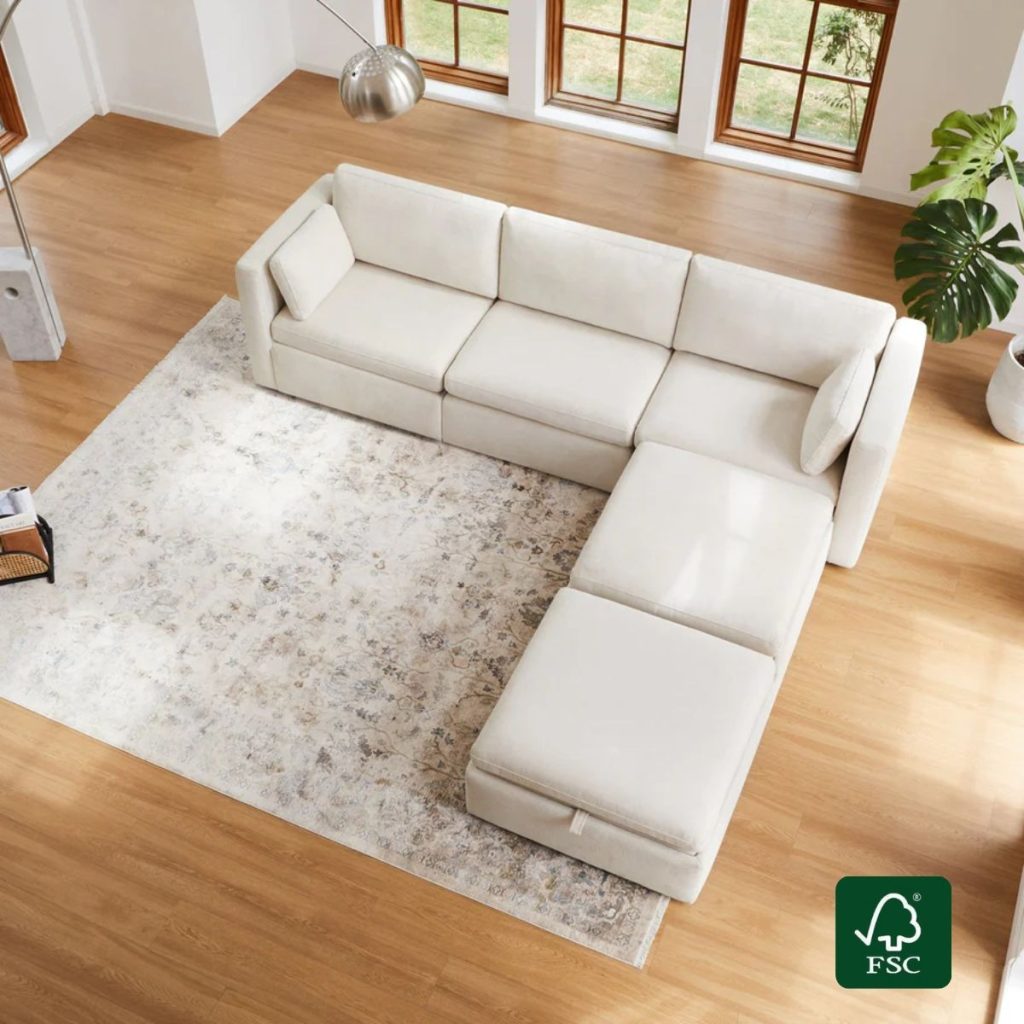
The authority of this shape also comes from its relationship with light and traffic flow. Designers frequently place the longer section along a wall opposite the primary window, letting daylight travel across the seat rather than fighting it. The chaise or return arm then reaches into the room, creating a natural stopping point for guests and a soft edge for foot traffic. This orientation-savvy approach explains why interiors magazines so often photograph sectionals as their hero pieces. They are not merely photogenic; they are compositional workhorses.
Craftsmanship Signals That Define Enduring Quality
Not every sectional is built to last, and the differences reveal themselves within the first year of daily use. Trend-aware makers such as CHITA LIVING have leaned into transparent craftsmanship, publishing details about frame construction, joinery methods, and the origin of their upholstery materials. A kiln-dried hardwood frame, corner-blocked and reinforced at load-bearing junctions, tends to outperform particleboard alternatives across a lifetime of movement. Suspension is another quiet indicator of quality. Eight-way hand-tied springs remain the traditional benchmark, though sinuous steel systems paired with high-resilience foam offer comparable comfort at accessible price points when executed carefully.
Fill materials deserve equal scrutiny. Feather-and-down blends deliver that coveted lived-in slouch, while high-density foam wrapped in fiber holds a crisper edge for more architectural silhouettes. Neither is universally better, but each aligns with a distinct design intention. Contemporary makers increasingly offer overstuffed cushions with mixed fills, giving the sitter cloud-like depth without sacrificing structural integrity. When shopping, run your hand along the seams, check the alignment of pattern repeats, and lift a cushion to inspect the underside. Authority in furniture is rarely loud. It shows up in the invisible details.
Materials and Palettes Setting the Current Standard
Textile trends in the sectional category have quietly matured. Where bright leathers and glossy microfibers once dominated showroom floors, today’s palettes lean toward performance weaves, boucle, textured chenille, and washed linen blends. Neutral foundations remain the dominant recommendation from color forecasters, particularly warm greiges, oat, dune, and soft graphite, because these tones age gracefully as accessories rotate. Deeper hues like forest, terracotta, and slate have gained ground for spaces where the sofa is meant to serve as a color anchor rather than a background note.
Performance fabrics have become the expected default rather than a premium upgrade, especially in households with children, pets, or open kitchens where cooking aromas travel. These modern textiles resist stains, tolerate frequent cleaning, and often carry certifications for indoor air quality. The trend among established brands is toward responsibly sourced wood frames, FSC-certified components, and low-VOC finishes, reflecting a broader consumer expectation that quality and stewardship travel together. When a manufacturer publishes these credentials openly, it signals a level of accountability that used to be reserved for high-end bespoke workrooms.
Configuring the Room With Expert Intention
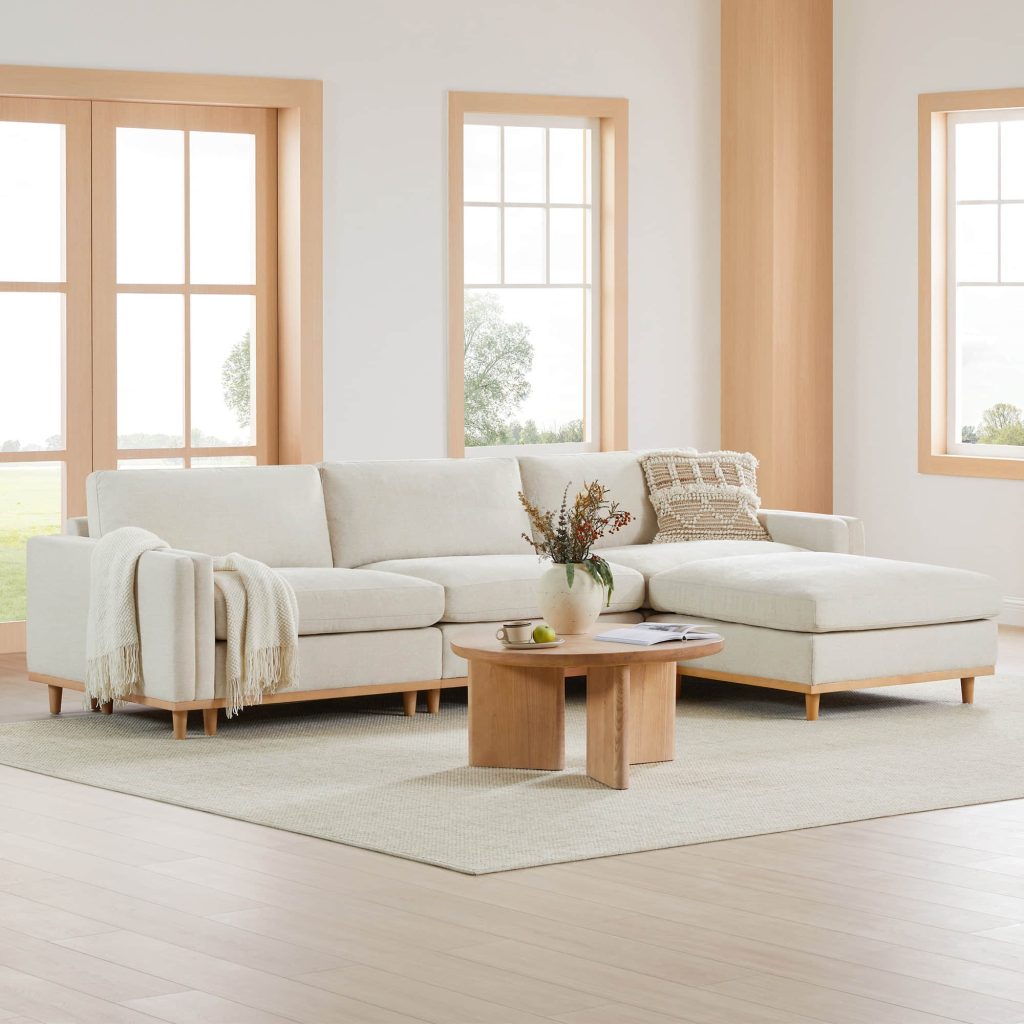
The single most common mistake with a sectional is treating it as a wall-hugger. Designers widely agree that pulling the piece a few inches away from the wall improves proportion, allows for a slim console behind it, and grants the eye visual breathing room. In smaller rooms, the chaise portion should face the primary entry so the piece feels welcoming rather than defensive. In larger rooms, floating the sectional to divide zones invites a rug beneath it that unifies the seating group and grounds the entire composition.
Scale is another expert consideration. A sectional that overwhelms the room reads as heavy and awkward, while one that is undersized loses its architectural presence. Trend guidance emphasizes negotiating with the room’s longest wall and its dominant sight lines. Coffee table pairings should echo the sofa’s geometry, favoring soft rectangles or organic ovals that permit easy circulation. Lighting should be layered around the piece rather than centered above it, and side tables should sit close enough that a cup of coffee is never a stretch. These are the quiet moves that transform a sectional from a purchase into a designed experience.
Longevity, Trend Resistance, and the Role of a Trusted Maker
The most compelling reason this silhouette continues to earn authority is longevity, both physical and stylistic. A well-built sectional in a considered neutral can survive multiple decor cycles, absorbing seasonal pillow swaps and evolving rug choices without ever feeling dated. Trend forecasters call this quality trend-resistant design, and it is increasingly the goal of both buyers and specifiers. Choosing a maker with a legible design point of view helps, because their aesthetic tends to age at a graceful pace rather than lurching from one micro-trend to the next.
Warranties, replacement cushion programs, and modular components extend that longevity even further. Sectionals that ship in individual pieces are easier to move through narrow doorways and staircases, which matters more than most first-time buyers anticipate. Reconfigurable modules also allow the same piece to transition between homes with different footprints. The result is furniture that behaves less like a disposable object and more like a long-term collaborator.
Bringing Considered Design Into the Everyday
The enduring authority of the sectional is not accidental. It is the outcome of thoughtful engineering, patient design refinement, and a growing cultural preference for furniture that welcomes real life rather than resisting it. Whether the room in question is a sunlit loft or a compact rental, the right configuration turns a living area into a genuinely inviting hub. Prioritize a sturdy frame, resilient fills, a palette that flatters the room’s light, and a maker whose values align with your own. Do this once, and the piece will quietly repay the effort for years, adapting to holidays, quiet Sundays, family movie nights, and everything in between. That is the real trend worth following, and it is one that shows no signs of losing its authority.
