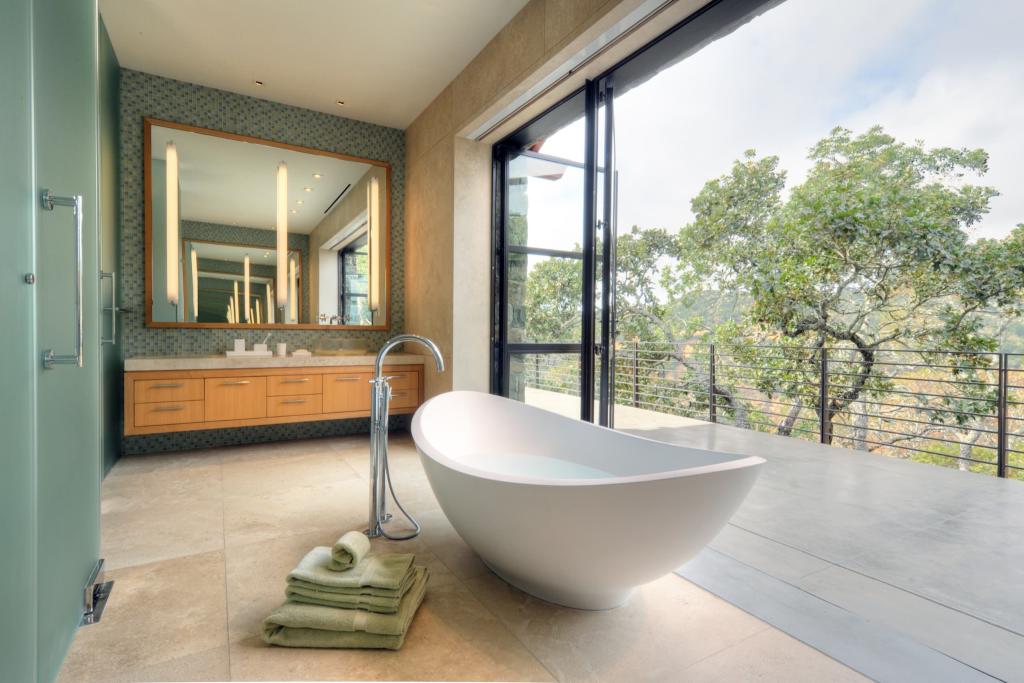
Outdoor bathrooms can turn a private backyard into a calm and functional retreat. Yet the flooring around showers, soaking tubs, and changing areas needs careful planning. This bath remodeling blog explores how artificial grass and synthetic turf can improve comfort, drainage, appearance, and maintenance around outdoor bathing spaces.
Natural grass may look inviting, but constant moisture can create mud, worn patches, and difficult upkeep. Synthetic turf offers another option. With proper installation, it can provide a clean surface that connects bathroom features with the surrounding landscape.
Why Outdoor Bathrooms Need the Right Ground Surface
An outdoor bathroom faces conditions that an indoor space rarely encounters. Rain, direct sunlight, soil, leaves, insects, and changing temperatures all affect the area. Water from showers and tubs adds another challenge.
Hard surfaces such as concrete and stone work well near plumbing fixtures. However, covering the entire retreat with hard materials can make it feel less connected to the landscape. Artificial grass adds a softer visual and physical surface between paved sections.
It can also reduce exposed soil around frequently used paths. Guests can move between a shower, tub, changing area, and seating zone without walking through dirt or wet natural grass.
Bath Remodeling Blog Tips for Choosing Synthetic Turf
Not every artificial grass product suits a wet outdoor environment. Homeowners should compare drainage performance, blade structure, backing materials, and intended use before selecting turf.
Fast drainage should remain a priority around showers and tubs. Perforated or highly permeable backing allows water to move through the turf instead of collecting on top. The prepared base underneath must also direct water away from structures.
Pile height affects both appearance and maintenance. Very long blades can look lush, but they may trap more leaves and debris. A medium pile often provides a useful balance between softness, realistic appearance, and easy cleaning.
Color matters as well. Turf with several shades of green and subtle brown fibers often blends more naturally with surrounding plants. The goal should be visual harmony rather than creating a surface that looks unusually bright.
Creating a Comfortable Transition Between Wet and Dry Zones
Good outdoor bathroom design separates very wet areas from spaces meant for relaxing. For example, stone or slip-resistant tile can sit directly beneath an outdoor shower. Synthetic turf can begin beyond that surface and lead toward seating, towels, or a dressing area.
This approach gives water a durable landing zone while keeping nearby areas visually soft. It also reduces the amount of hardships required across the retreat.
During a larger bath remodeling project, designers can use the same principle to connect indoor and outdoor spaces. Similar textures, plant choices, and neutral materials can make the transition feel intentional.
A narrow turf path can also guide movement through the space. It may connect a bathroom door with a private shower enclosure or lead from a soaking tub toward a garden seating area.
Drainage Makes the Biggest Difference
Artificial turf itself does not solve drainage problems. The complete installation system determines how effectively water leaves the surface.
Installers usually remove unsuitable soil and prepare a stable, compacted base. The exact materials and depth depend on site conditions, expected traffic, drainage needs, and the turf manufacturer’s specifications. Proper grading helps move water away from the house and other structures.
Drainage becomes especially important near an outdoor shower. Soap, water, and frequent foot traffic can place extra demands on the area. Local rules may also control how graywater or shower runoff must be handled.
A qualified contractor can assess the site before installation. This step helps prevent low spots, standing water, and moisture problems near foundations or walls.
Privacy and Landscaping Can Work Together
A successful outdoor bathroom needs more than attractive flooring. Privacy often determines whether the space feels comfortable enough for regular use.
Screens, fencing, masonry walls, pergolas, and dense planting can block unwanted views. Their placement should provide privacy without trapping excessive moisture around the bathing area.
Synthetic turf can visually connect these features. Green flooring beside timber screens or planted borders can soften the transition between constructed and natural elements.
Homeowners should also consider mature plant size. Plants placed too close to turf may eventually drop large amounts of leaves or spread roots into prepared areas. Thoughtful spacing makes future maintenance easier.
Artificial Grass Can Reduce Mud and Lawn Maintenance
Natural lawns require mowing, watering, edging, and seasonal care. They can also struggle in shaded areas near privacy walls or covered outdoor bathrooms.
Artificial turf avoids mowing and does not need irrigation to remain green. It can be especially practical in narrow side yards or enclosed retreat spaces where lawn equipment is difficult to use.
However, synthetic grass is not maintenance-free. Leaves, dust, hair, and other debris still need removal. Occasional brushing can help lift flattened fibers in higher-traffic areas.
Wet spaces may require more frequent rinsing and cleaning. Owners should follow the turf manufacturer’s instructions and use products that will not damage the fibers or backing.
Consider Heat, Sunlight, and Bare Feet
Outdoor bathroom users often walk barefoot, so surface temperature deserves attention. Artificial turf can become hot under strong direct sunlight, especially during warm afternoons.
Shade can improve comfort. Pergolas, trees, privacy screens, umbrellas, or strategically positioned structures can reduce direct exposure. Homeowners should test turf samples in local conditions before making a final choice.
Light-colored surrounding materials may also help create a more comfortable setting. Large areas of dark paving can absorb heat and make the entire retreat warmer.
This is one reason a bath remodeling blog should consider climate as part of material selection. A surface that performs well in a mild region may need additional shade planning in a hot climate.
Plan the Turf Around Plumbing and Access Points
Outdoor bathroom upgrades often include water lines, drains, electrical connections, lighting, or irrigation. Turf installation should not make these systems difficult to reach.
Contractors should identify cleanouts, valves, drains, and utility access points before preparing the base. Keeping important service areas accessible can prevent unnecessary turf removal during future repairs.
Edges also need careful attention. Turf should meet paving, decking, walls, and garden beds cleanly. Secure borders reduce movement and create a finished appearance.
For complicated projects, coordinating the plumber, landscaper, turf installer, and remodeling contractor can prevent conflicts. Planning the installation sequence early often saves time later.
Designing a Retreat Instead of a Utility Area
An outdoor bathroom should support the way people actually use the space. A shower may serve swimmers after leaving a pool. A private soaking tub may function as a quiet evening retreat. Other homeowners may simply want a convenient place to rinse off after gardening.
The surrounding turf should support that purpose. A small shower area may need only a short synthetic grass walkway. A larger wellness retreat could include turf around lounge seating, planted borders, and stepping stones.
Furniture and accessories should also tolerate outdoor conditions. Weather-resistant benches, towel hooks, covered storage, and suitable lighting can make the area more practical without overcrowding it.
Build the Space Around Long-Term Use
Artificial grass can give an outdoor bathroom a softer, cleaner connection to the landscape, but good results depend on the complete design. Drainage, privacy, shade, plumbing access, edging, and cleaning requirements all deserve attention before installation begins.
Homeowners planning bath remodeling should choose materials based on climate and actual use rather than appearance alone. Working with experienced installers can also help ensure that drainage and base preparation suit the site.
A useful bath remodeling blog should help homeowners look beyond individual fixtures. By treating synthetic turf as part of the wider landscape and water-management plan, an outdoor bathroom can become easier to use, maintain, and enjoy for years.
