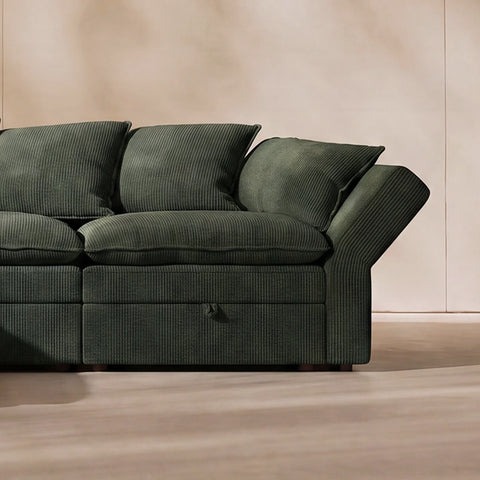
Shopping for a couch has quietly become a two-camp decision. On one side are the ultra-soft, feather-blended designs that let you sink in the moment you sit down. On the other are the more traditional, structured couches with firmer cushions, defined arms, and a shape that stays neat whether or not someone is sitting on it. Both look good in photos. Both come in the same price ranges. Both promise long life. So how do you actually choose between them, especially when you cannot spend three months living with each one before making up your mind?
This comparison walks through what each style is genuinely better at, and where each one falls short, based on the way people actually use their living rooms. It covers structure, longevity, day-to-day use, guests, kids, pets, and the small design compromises hiding behind each decision. By the end you will know which side of the debate matches your household, not just which one looks better on your feed.
The Core Difference Behind the Comfort
Traditional couches are engineered around the principle of consistent support. Firm foam cushions, tighter stitching, and squared-off proportions keep the seat surface at a predictable height, which is why they look neat all day and let you stand up without effort. This style dominates hotel lobbies and formal living rooms for a reason: it photographs well, seats guests upright for conversation, and rarely needs fluffing.
A modern cloud sofa flips that priority. It is engineered around the principle of yielding to the human body, so the cushion depth, filler blend, and cover slack are all tuned for a soft, enveloping sit. HONBAY and other brands in this space favor feather-and-foam layered fillings that compress on contact and rebound overnight. The tradeoff is a slightly less tailored look and a real daily habit of plumping, in exchange for a sensation of being cradled rather than propped up. Neither engineering choice is wrong. They are optimized for different moments.
How the Structure Feels in Practice
Sit on a traditional couch and you land at a defined seat height, with your knees usually at ninety degrees, ready to converse, work on a laptop, or eat from a coffee table. Sit on a plush design and you drop a couple of inches lower, your legs slightly outward, your posture inviting a book or a pet across your lap. The first is easier for hosting adults over drinks. The second is easier for reading, napping, and Sunday afternoons that stretch into evening.
Longevity Compared Honestly
Well-built firm couches tend to hold their exact silhouette for a decade or more because there is less to compress. Well-built plush couches can also last a decade, but they need weekly maintenance to keep looking their best. If you skip the fluffing habit for a year, a soft cushion will start to develop permanent body-shape impressions. This is not a defect. It is physics acting on soft fill. If you cannot commit to five minutes of cushion care each week, the traditional side of the aisle will forgive you more.
Daily Life Head-to-Head
Consider the specific moments that repeat in most households. Morning coffee. A quick call. A long movie. Kids climbing over the arms. A dog claiming the corner. Each of these plays out differently on the two styles, and honestly evaluating which moments dominate your week is the fastest way to a good decision.
The soft side wins for lounging, family piling in, and reading marathons. The firm side wins for entertaining adults, working from home, and rooms that need to look composed at all times. Households that host formal dinners twice a month get more value from a structured couch. Households that essentially live in the living room, working, snacking, watching, hosting casually, tend to prefer the sink-in variety even if the room looks slightly less curated an hour after everyone gets up.
Kids and Pets
Plush designs with removable, washable covers dramatically outperform fixed-cover traditional couches when children and animals are part of daily life. Spills on a slipcover are laundry, not damage. Muddy paws on a fixed upholstery panel are a professional cleaner’s bill. On the flip side, firm couches with tightly woven synthetics resist claw snags better than looser, softer weaves. Cats who love to knead may prefer the plush option, which is either a feature or a problem depending on your point of view.
Hosting Overnight Guests
A deep, soft sectional can comfortably host a napping guest without unfolding into a bed at all. A firm traditional couch is less generous for overnight sleep unless it includes a proper sleeper mechanism. For homes without a spare room, this factor alone can decide the purchase. Ask yourself how often anyone will actually sleep on this thing per year. If the answer is more than twice, the softer route wins on hospitality.
Room Design and Visual Weight
Firm traditional couches sit taller and read as more architectural in a room. They pair well with tailored curtains, structured coffee tables, and rooms with strong lines. Plush designs read as casual and horizontal, which flatters open-plan spaces and rooms already softened by rugs, curtains, and lots of natural light. The wrong pairing (a heavy formal couch in a beachy open kitchen, or a sprawling plush sectional in a small formal parlor) fights the room rather than settling into it.
Consider the ceiling height. Low ceilings feel taller with lower-profile plush seating that keeps the eye moving horizontally. Very tall ceilings need the visual anchor of a taller-backed traditional couch to keep the room from feeling cavernous. This detail alone often decides which category actually suits a given living room, regardless of personal taste.
The Cost of Care Over Five Years
Firm couches usually need professional cleaning every few years and light vacuuming weekly. Plush couches with removable covers need home laundering every few months per section, weekly fluffing, and roughly the same vacuuming. Neither is dramatically more expensive to maintain, but the plush side asks for a small ongoing habit while the firm side asks for occasional larger interventions. If you love routines, the plush side is easy. If you prefer to leave furniture alone until it visibly needs help, the firm side matches your temperament better.
Picking the Winner That Matches Your Life
The honest verdict is that both styles win, just for different lives. If your evenings are for stretching out, reading, watching movies, and welcoming casual guests, the soft, plush design will make you happier every single day. If your living room hosts formal conversations, business calls, and stays photograph-ready for drop-in visits, a well-built traditional couch is the more sensible companion. Match the couch to the moments that repeat most often in your home, not the ones you wish repeated more often. Consider ceiling height, cover washability, and your realistic willingness to fluff a cushion each week. Do that honestly, and either choice will feel right for years, because the winner is not a shape or a fabric. It is the couch that respects how you actually live.