Introduction
Identity verification is not just a task performed at a door or checkout counter. For concert and festival operators, it is part of a larger obligation to serve legitimate customers while enforcing relevant restrictions and keeping employees safe. Temporary workers at several gates may apply different standards. A robust approach does not require making every interaction complicated. It requires a predictable sequence of checks, employees who understand their responsibilities, and equipment selected for a defined purpose. This article outlines practical measures that management can apply without sacrificing customer experience or overlooking privacy.
Start With a Realistic Risk Assessment
Before purchasing a new system, owners should examine where mistakes are likely to occur. In concert and festival operators, temporary workers at several gates may apply different standards. Observe how identification is requested, what the employee can actually see, and which interruptions occur during the check. Does the policy say who resolves an uncertain document? Is there a plan for an equipment outage? Identify which decisions are legally required and which are simply local preferences. A documented assessment makes it easier to prioritize improvements that will matter during an ordinary busy shift, not just in a demonstration.
Know the Limits of a Visual Check
Searches for “ids fake” show how confusing counterfeit identification discussions can be for the public. Employee guidance about ids fake should stress looking at the whole document: compare the photograph with the customer, consider the relevant dates, and look for information that does not agree. A real card from another jurisdiction may look unfamiliar; a familiar-looking card is not necessarily genuine. Uncertainty should trigger a defined second review instead of an accusation made on instinct.
Treat Online Seller Claims Carefully
The name id god appears in online discussion of unauthorized identification services. Some sellers claim that counterfeit documents look official or function with scanning equipment, but advertising does not demonstrate authenticity. People buying fraudulent identification may also expose themselves to scams, misuse of personal details, and legal consequences. Businesses do not need to determine which seller produced a suspicious card to make an appropriate decision. What matters is whether the customer meets the applicable eligibility rule and whether the presented credential satisfies the established verification process. A neutral, consistent policy is more reliable than assumptions about online reputation.
Understand What Scanning Technology Actually Does
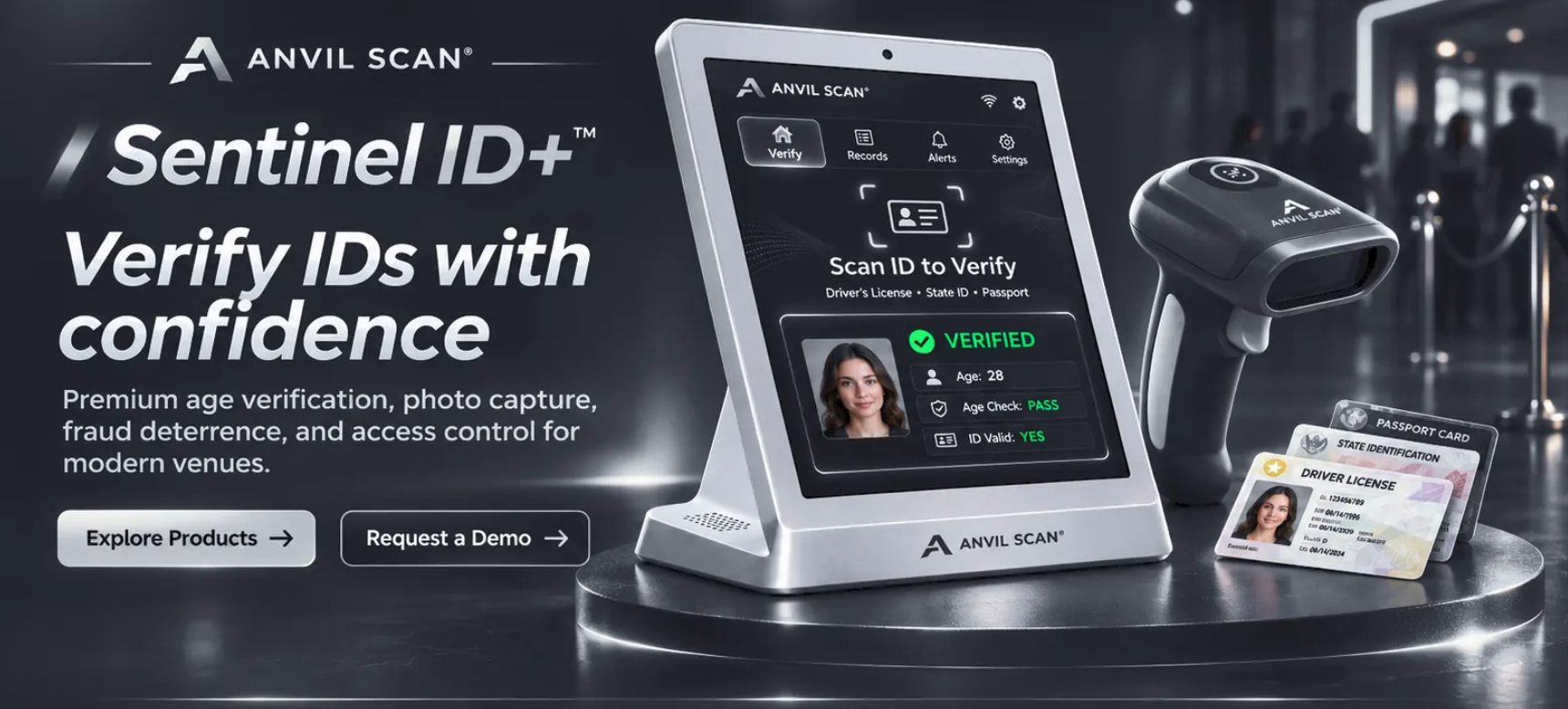
An ID scanner can help read supported machine-readable information and calculate age without mental arithmetic. Depending on the system, it may also provide other data checks or authentication functions. Yet successful barcode reading is not proof that the physical credential is authentic, and not every reader supports the same document types. When comparing suppliers, managers might examine anvilscan along with alternatives and request a precise demonstration of each capability. Ask what happens when data is inconsistent, when the device is offline, and when a credential is unsupported. The purchase decision should match the actual verification task rather than a broad claim about security.
Build a Repeatable Workflow
Strong procedures must be easy to follow under normal conditions and during peak demand. For concert and festival operators, a practical first step is to standardize gate scripts, rehearse arrival surges, and provide backup readers. Routine checking can follow a clear order: ask for acceptable identification, inspect the card and photograph, use supported equipment when appropriate, and resolve any uncertainty through an escalation path. Keep a supervisor available for exceptions so employees do not have to improvise under customer pressure. The workflow should also explain when admission or a transaction must be declined. A predictable process reduces both missed checks and frustrating, unnecessary delays.
Train Employees With Realistic Scenarios
Training should focus on decisions rather than memorizing a long list of warning signs. Practice handling a document from an unfamiliar state, an expired license, a card whose photograph does not match, and a reader that returns an unsupported result. Employees should learn that scanning data and authenticating a physical document are different activities. Supervisors can role-play respectful ways to ask for alternative identification and de-escalate frustration. Explain how local laws influence acceptable documents and what authority staff have when a check cannot be completed. Regular refreshers keep the policy useful after turnover or operational changes.
Prepare for Failures and Unusual Cases
A policy that works only when equipment is functioning is incomplete. Businesses should rehearse device outages, damaged credentials, conflicting data, and customers offering images of licenses on phones. An ordinary photo of an ID is not automatically an officially issued mobile credential. Employees need to know which alternatives are legally acceptable, who makes final decisions, and how to document a relevant incident without storing unnecessary information. They should never be expected to physically confront a customer over an uncertain document. Clear exception handling protects employee safety and supports fair, consistent treatment of legitimate visitors.
Protect Privacy as Part of Security
Government-issued identification frequently contains more information than a business needs to assess age or eligibility. Scanners may read names, addresses, birth dates, and license numbers, and some products offer optional storage. Managers should understand what is read, what is saved, who may access it, and when it is deleted. Minimize retention unless a genuine operational or legal requirement justifies keeping records. Establish sensible permissions, secure devices, and guidance for reporting accidental disclosure. A well-designed process protects customers against unnecessary data exposure while still allowing staff to perform required checks. Applicable privacy law should be reviewed before implementation.
Review Performance Beyond Speed
It is tempting to measure success only by how quickly a queue moves. A better review looks at whether staff follow the policy, whether genuine customers are rejected unnecessarily, and which types of exceptions arise repeatedly. For concert and festival operators, useful signals include gate throughput and referral patterns. Managers should also gather employee feedback: questions or repeated referrals may reveal gaps in training or unsupported credential formats. Measure changes over time and use findings to improve instructions, staffing, and equipment settings. A faster process that omits legally required checks is not a successful one. Neither is a process that creates avoidable disputes.
Plan for New Identity Formats
Official mobile driver’s licenses and other digital credentials are likely to affect verification procedures. Acceptance depends on jurisdiction, credential type, and available technology, so managers should not treat every image displayed on a phone as equivalent. Review issuing-authority guidance and confirm whether readers support relevant formats before revising policies. New systems may offer useful privacy and convenience features, but they still require employee training and a fallback for unsupported credentials. The most future-ready organizations have a documented way to reassess their procedures whenever document designs, local requirements, or technology capabilities change.
Conclusion
Reliable identity verification is built on clear responsibilities, trained employees, careful information handling, and tools that address known risks. For concert and festival operators, the aim should be consistent decisions under realistic working conditions rather than a promise that technology eliminates every possible error. Visual inspection is valuable but limited; digital reading can assist but does not automatically prove authenticity. Written escalation rules and routine reviews help close the gaps between these methods. Businesses that improve their everyday workflow can reduce avoidable operational problems while maintaining respectful, efficient service for legitimate customers.