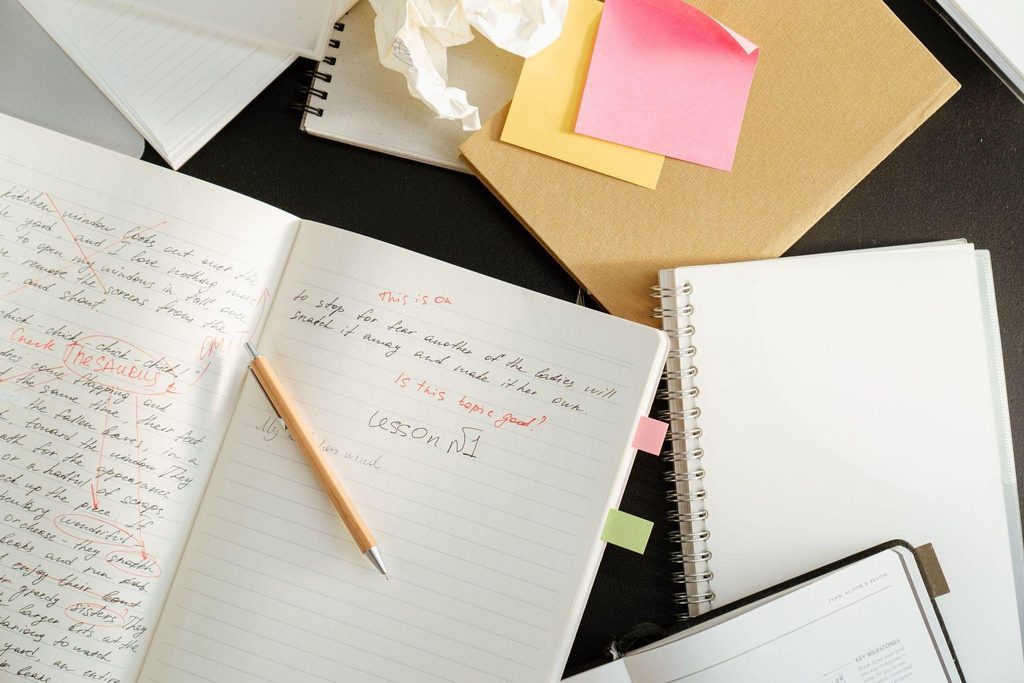
One comma can make a line feel careful. One sentence break can make it feel certain. That’s the quiet tension in grammar — the edits we make to “clean up” a draft often flatten its voice instead. Think of this less as a rulebook and more as a feel-based editing pass: tune sentence length, punctuation, modifiers, conjunctions, pronouns, and fragments, and watch how each small choice changes what the reader hears in your voice.
Choose the Effect Before You Fix the Grammar
Here’s the thing — a sentence can pass every grammar test and still land wrong. “Please be advised that your request has been received” is technically correct. It’s also cold. Grammar shapes how confident, warm, or careful you sound, whether you mean it to or not. So before editing anything, decide what you’re going for:
- Calm: balanced sentence length, fewer interruptions, steady punctuation
- Urgent: cut the setup, get to the action fast, keep sentences short
- Intimate: direct pronouns, contractions, plain verbs
- Authoritative: drop hedges like “just,” “maybe,” “kind of,” “I think”
- Playful: let rhythm shift, allow the occasional fragment
- Precise: swap vague nouns for exact ones
Judge the edit by the feeling it leaves behind, not by how formal it sounds. Ask “does this sound like the stance I need?” instead of “is this correct?” Tools can help during a cleanup pass — but they can also flatten the cadence you’re trying to protect. Getsolved AI humanizer is built for that moment: it takes stiff or robotic lines and reworks them into something that reads like a person wrote it, without touching your meaning, punctuation, or rhythm. Even so, your ear stays the final judge — read it out loud and see if it sounds like you.
Sentence Length Works Like a Volume Knob
Short sentences turn the volume up — certainty, speed, impact. Long ones ease off, giving room to breathe.
| Sentence habit | How it feels | When to use it | When it backfires |
| Mostly short sentences | Direct, firm, fast | Captions, calls to action, key takeaways | Can feel blunt or robotic |
| Mostly long sentences | Thoughtful, layered | Essays, newsletters, scene-setting | Can feel foggy or padded |
| Mixed lengths | Human, controlled, rhythmic | Blog posts, essays, story-driven writing | Feels messy without a clear purpose |
Compare: “The launch failed. The plan was rushed.” versus “The launch failed because the plan moved too fast, and customers couldn’t tell what had changed.” The first hits hard — good for a caption. The second gives context — better for an essay. Force needs short. Texture needs long.
Punctuation Controls the Reader’s Breath
Punctuation isn’t decoration sitting there for grammar’s sake. It tells the reader exactly where to pause, lean in, or push back a little.
- Comma — connects ideas, keeps the tone warm
- Period — stops motion, adds weight
- Colon — builds anticipation before a reveal
- Semicolon — puts two ideas on equal footing
- Dash — interrupts, dramatizes (too many, though, and it gets jittery)
- Parentheses — lowers the voice, almost like a whisper
- Ellipsis — creates hesitation, but overdo it and confidence leaks out
Try this: swap out a punctuation mark in something you’ve written — comma for a period, whatever — and read both out loud. Whichever gives it the right breath and authority, keep that one.
Clean Up the Grammar, Not the Personality
Polished grammar doesn’t automatically mean better writing. Sometimes it just strips out the small imperfections that made the sentence sound human. Fix what genuinely confuses a reader — unclear pronouns, mismatched agreement, misplaced modifiers. Leave the rest alone: contractions, short fragments, a sentence starting with “And” or “But” because that’s how you’d say it.
Compare “I do not believe this plan will succeed” with “I don’t think this plan is going to work.” The second feels more alive — a person breathing, not a rulebook nodding along.
Move Modifiers Closer to What They Actually Modify
“Covered in cinnamon sugar, Maya served the donuts to her subscribers” accidentally coats Maya, not the donuts. A small mistake, but it flips the whole mood — from professional to unintentionally funny.
- Keep descriptive phrases next to the noun they belong to
- Watch for dangling modifiers at the start of a sentence
- Keep adverbs close to the verbs they modify
- Don’t stack too many adjectives in a row
- If a phrase could attach to two parts of a sentence, split it
“A candle in a ceramic jar with notes of cedar and smoke” reads clean. Reorder those details and it feels cluttered. Same in personal writing — “Exhausted after the launch, I finally answered my mother’s text” feels controlled. Flip the clause order and it goes loose.
Pick Conjunctions for the Feeling, Not Just the Logic
Take a simple pair: I liked the idea. The timing felt wrong.
| Version | Emotional effect |
| …and the timing felt wrong. | Adds a fact, doesn’t really resolve the tension |
| …but the timing felt wrong. | The objection takes over |
| …so the timing felt wrong. | Frames it as consequence |
| …because the timing felt wrong. | Odd logic unless the timing was the appeal itself |
| …although the timing felt wrong. | Holds praise and doubt together, more generous |
Conjunctions are tiny steering wheels for tone. And piles on. But pulls toward resistance. So points to consequence. Because reassures. Although adds nuance without turning the second half into a rebuttal. Stack too many buts, though, and even gentle feedback starts to sound like complaints.
Fragments Let the Reader Feel the Pause
| Myth | Reality |
| Fragments are always mistakes | Unclear fragments are mistakes — intentional ones sharpen tone |
| A fragment sounds uneducated | A well-placed one can sound intimate, dramatic, or just blunt |
| Every idea needs a full sentence | Sometimes the missing subject is obvious, and that’s the point |
A fragment works when the reader can fill in the blank without effort. “No apology. No explanation. Just silence.” The grammar’s broken there, but the meaning isn’t unclear. Lean on fragments in creative writing — dial them back for academic or legal work.
Trim the Words That Sound Scared
| Common softener | Stronger alternative |
| I just wanted to say | Say it directly |
| Maybe we could | “We could” or “I recommend” |
| I think this might be useful | “This will help” or “This is useful because…” |
| Kind of important | “Important” or “worth prioritizing” |
| Really good | An exact adjective — clear, specific, persuasive |
| Very difficult | Complex, time-consuming, unclear |
“I have an idea for the launch email” sounds a lot more certain than “I just wanted to share an idea.” Qualifiers aren’t the enemy — “may” or “often” earn their place when certainty would distort the truth. The goal isn’t sounding aggressive. It’s dropping the fear while keeping the accuracy.
Choose Distance With Pronouns
| Choice | Reader effect | Best fit | Watch for |
| I | Personal accountability | Essays, founder notes, opinion pieces | Can feel self-focused |
| We | Shared experience | Newsletters, community updates | Can sound presumptive |
| You | Immediacy | Tutorials, sales pages, guides | Can feel accusatory with criticism |
| They | Distance | Analysis, case commentary | Can feel detached |
| Passive | Removes or centers the action | Formal reports, process notes | Can sound evasive |
“I” for intimacy. “You” for direct guidance. “We” for shared context. “They” when analysis needs distance. Passive phrasing only when the actor matters less than the outcome.
Active or Passive — It’s About Where You Point the Camera
| Voice | Example | Attention lands on | Usual effect |
| Active | The editor cut the paragraph. | The actor | Clear, direct, accountable |
| Passive | The paragraph was cut. | The action or result | Neutral, tactful, or evasive |
“Never use passive voice” is bad advice dressed up as a rule. Passive only turns weak when it hides something the reader needed to know. Reach for active voice when responsibility matters or instructions need to be clear. Reach for passive when the actor is unknown, or naming them would be beside the point.
One Last Feel Check Before You Hit Publish
This last pass isn’t about hunting down every tiny error. It’s checking whether your grammar choices create the pace and tone you set out for.
- Name the feeling you’re going for before you touch anything
- Read it out loud — your ear catches what your eyes miss
- Check sentence length variation and punctuation pauses
- Cut the nervous padding — “kind of,” “just,” “I think”
- Trace every “it,” “this,” “they” back to what it refers to
- Confirm any fragments or broken rules are choices, not accidents
| Choice | Keep it | Revise it | Break the rule |
| Grammar habit | Clarifies meaning, supports tone, fits the audience | Distracts or creates doubt | Adds voice without losing the point |
| Formal standard | Protects clarity or publication fit | Sounds stiff for the context | Only when it reads as style, not as a mistake |
Grammar is a control panel, not a cage. Follow the rules when they earn the reader’s trust. Bend them when bending gets you closer to how you actually sound.